Advertisement
Home Improvement 3m read
0

Your Utensil Drawer Holds the Secret to Perfectly Hung Pictures

One of the best things about decorating your home is putting together a collection of items that feels like an extension of your personality and the life lived within your space. An easy way to showcase your style is by curating wall art, whether it’s thrifted oil paintings, family photographs, or handmade needlepoint projects. These works of art help breathe life into your space, making it feel less like a staged room and more like a lived-in abode.

One of the best things about decorating your home is putting together a collection of items that feels like an extension of your personality and the life lived within your space. An easy way to showcase your style is by curating wall art, whether it’s thrifted oil paintings, family photographs, or handmade needlepoint projects. These…

Although many of us love to have artwork adorning our walls, the task of hanging said items can be daunting. Even after you figure out where to hang everything and start hammering nails into the wall, you have to wrestle with picture frames to get everything to look straight. This is particularly tricky with thrifted frames that have wires for hanging — they never seem to want to catch the nail. Fortunately, there’s a genius hack for hanging pictures with wire, and the only tool you need is already inside your utensil drawer.

Related: This Easy Hack Makes Cheap Posters Look Like Expensive Works of Art

The Best Hack for Hanging Pictures With Wire

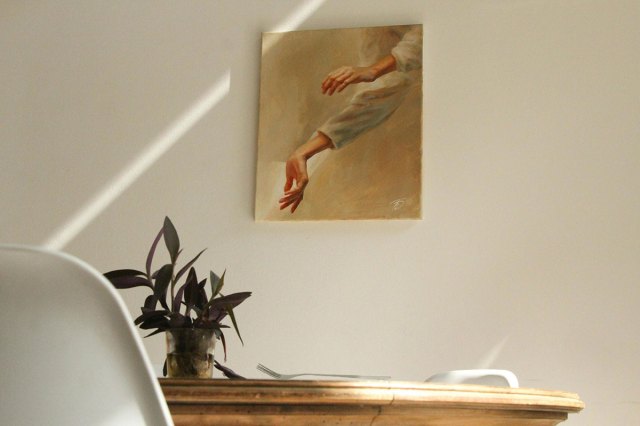
Once you decide where you want to hang your picture frame and hammer the nail in place, reach inside your utensil drawer and grab a fork (just trust us on this one). Then, slide the fork over the nail so that the prongs face down and the handle faces upward in a hooklike manner. From there, slide your picture frame wire over the fork (like you’re hanging it onto an extra-large hook), and then pull up the fork to remove it. The wire should now be secured over the nail. Next, grab a level from your toolkit and make any necessary adjustments to the picture frame. You’ll be left with a perfectly hung piece of art, with the nail sitting right at the center of the wire.

Advertisement
3 Expert Design Tips for Hanging Artwork

1. When designing a gallery wall, leave 2 to 3 inches of space between each piece. To get the arrangement just right, trace each item onto butcher paper and cut out the shapes. Use washi tape or painter’s tape to adhere the cutouts to the wall, and arrange and rearrange them to your heart’s content.

2. If you’re hanging a piece of art on a blank wall without anything below it (including furniture and other artwork), the center of the image should be about 60 inches off the ground. Hanging art too high is a common design mistake — you want the piece to be at eye level so it can be easily admired by the viewer.

3. To create a balanced look when displaying art above a large piece of furniture, such as a sofa, bed, or sideboard, make sure it’s two-thirds the width of the furniture. Additionally, art should be hung about 4 to 8 inches above the furniture below it.
Advertisement
Jessie Quinn
Writer
Jessie Quinn is a Los Angeles-based lifestyle journalist with words published in PEOPLE, StyleCaster, Apartment Therapy, The Spruce, Byrdie, and more. She has a Bachelor's Degree in fashion journalism from Academy of Art University and her work spans across many categories, including style, beauty, home, health, crafts, and more.
This article is for general informational purposes only.
Affiliate Disclaimer 
|
Financial Disclaimer
Featured Image Credit:  Tiana/ Pexels | Updated  Oct 9, 2024 |
Advertisement
Decorating 3m read
0

This Is the Secret to Fluffy, Luxury Hotel-Style Bedding

There’s nothing quite like a luxury hotel bed. The mattress feels just right, the pillows are perfectly plush, and the sheets always look so fresh and crisp. Combined with welcoming decor and pure vacation bliss, it’s a recipe for sleeping soundly once you plop down on the bed. But what if we told you there’s a way to achieve hotel-level comfort in your very own bedroom?

All featured products and deals are selected independently and objectively by the author. House Outlook may receive a share of sales via affiliate links in content.

There’s nothing quite like a luxury hotel bed. The mattress feels just right, the pillows are perfectly plush, and the sheets always look so fresh and crisp. Combined with welcoming decor and pure vacation bliss, it’s a recipe for sleeping soundly once you plop down on the bed. But what if we told you there’s…

How To Create a Hotel-Quality Bed

The only thing better than the look of fluffy hotel bedding is how good it feels to curl up in it after a long day. To bring that comfort home, all you need are a few bedding tricks and upgrades. Start with your favorite set of sheets. If yours are due to be replaced, opt for something soft and cooling for a more comfortable night’s sleep.

Related: The Designer Trick for Choosing the Right-Sized Area Rug

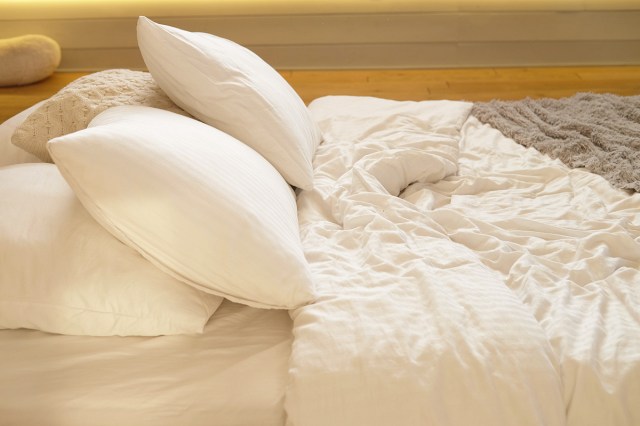
Now, here’s the secret to cloudlike bedding: Use a duvet cover and insert that are one size larger than your mattress. When you size up, the duvet cascades over the edges of your bed and makes it look nice and full. If you want even more fluff, there’s a trick for that, too. Instead of using just one duvet insert, layer two of them within your duvet cover. This will give your bed even more loft, and make it extra warm and cozy during the colder months.

Advertisement

Invest in Premium Accessories

If you really want to nail the hotel look, swap your pillows for some filled with down or a down-alternative. These pillows are luxuriously full and easy to mold to your desired shape, whether you prefer to karate-chop your cushions or simply fluff them. Then, you can top off your bed with some luxe accents, like throw pillows with ultrasoft pillow covers.

So, the secret’s out — all it takes to craft a luxury hotel-inspired bed is an oversized duvet cover and one or two duvet inserts. (Bonus points if you spring for hotel-quality pillows!) It’s a fail-proof trick that even interior designers and decorators use to make a bed look plush and inviting.

Advertisement
Pauline Lacsamana
Writer
Pauline Lacsamana is a freelance writer and editor who specializes in commerce, home, design, and lifestyle. She has bylines in The Spruce, Business Insider, U.S. News & World Report, Hunker, MyDomaine, Parade, and more.
This article is for general informational purposes only.
Affiliate Disclaimer 
|
Financial Disclaimer
Featured Image Credit:  Cheschhh/ iStock | Updated  Sep 23, 2024 |
Advertisement
Decorating 3m read
0

The Designer Trick for Choosing the Right-Sized Area Rug

A well-chosen area rug can instantly transform a room, taking it from flat and unfinished to elevated and intentional. Area rugs can define zones in an open-concept space or make a room feel more cohesive and welcoming.

A well-chosen area rug can instantly transform a room, taking it from flat and unfinished to elevated and intentional. Area rugs can define zones in an open-concept space or make a room feel more cohesive and welcoming.

Beyond adding a pop of color or a touch of personality, area rugs are also very functional. You can use them to cover up floor scratches or discoloration, prevent wear and tear, and reduce noise transfer, which is especially important if you live in an apartment building.

Size is the most important factor when shopping for an area rug that will work in your space — and there are a few designer tricks you can use to get it right.

Related: How To Use the Rule of Three To Decorate Like an Interior Designer

The Two-Leg Rule

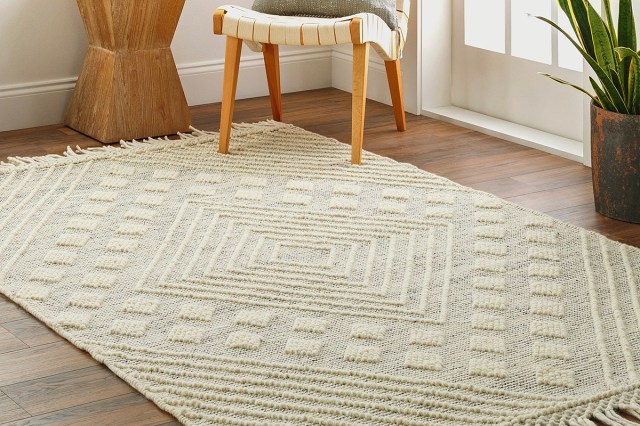
For starters, you want a rug that’s big enough to touch all of the furniture in the area you’re trying to define. At a minimum, the front two legs of each furniture piece should be on the rug. If you want to place all four legs of your furniture on an area rug, you’ll need a big rug and an even bigger budget (area rugs are notoriously expensive).

Advertisement

The Art of Rug Sizing

Avoid purchasing an oversized area rug that overwhelms the space and must be pushed up against the wall. Instead, opt for something that provides at least 6 inches of space between the wall and the edge of the rug; anything less will make the room look smaller.

Similarly, selecting an area rug that’s too small can make a room feel disconnected and, unfortunately, cheap. If it’s a family heirloom or you’ve missed the return window, simply layer the smaller area rug on top of a more substantial one to cover more floor space. This will create a cozy, textured look that’s pleasing to the eye.

The next time you’re picking out a new area rug for your bedroom or home office, remember this designer trick. The right area rug will make your space feel more grounded and luxurious, no matter how much you spend.

Advertisement
Pauline Lacsamana
Writer
Pauline Lacsamana is a freelance writer and editor who specializes in commerce, home, design, and lifestyle. She has bylines in The Spruce, Business Insider, U.S. News & World Report, Hunker, MyDomaine, Parade, and more.
This article is for general informational purposes only.
Affiliate Disclaimer 
|
Financial Disclaimer
Featured Image Credit:  Design gallery01/ Shutterstock | Updated  Sep 23, 2024 |
Advertisement
Organizing 3m read
0

3 Actually Useful Hacks To Keep Jewelry From Tangling While Traveling

Are you the type of traveler who wears most of their jewelry while in transit? Many of us do this not to make a fashion statement — although mixing metals is trending — but to save ourselves the headache of untangling necklaces, bracelets, and earrings when we arrive at our destination. However, this isn’t really the best trick for organizing jewelry (and sometimes results in a knotted mess around your neck anyway).

Are you the type of traveler who wears most of their jewelry while in transit? Many of us do this not to make a fashion statement — although mixing metals is trending — but to save ourselves the headache of untangling necklaces, bracelets, and earrings when we arrive at our destination. However, this isn’t really…

As it turns out, there are some genius hacks to keep jewelry from tangling while traveling, most of which involve items you likely already have lying around your home. If you plan to swap out your accessories while traveling, give these three packing methods a try.

1. Use Spare Buttons for Earrings

Wondering what to do with all of those extra buttons that come with your clothes? Good news: They can be repurposed as earring organizers to prevent hoops, studs, and other styles from getting lost or tangling into one big wadded mess. When packing your accessories, remove the backs of your earrings and slide the posts into the buttonholes. Then, secure the backings in place on the back of the button, and you have a handy earring card that takes up hardly any space and keeps everything organized.  

Advertisement

2. Thread Necklaces Through Straws

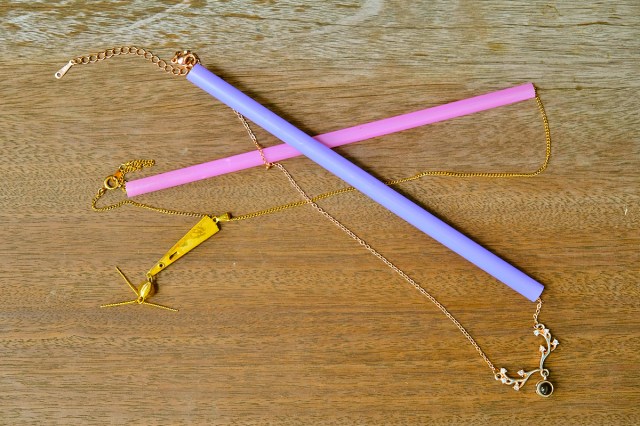
Unpacking necklaces and bracelets can result in a bird’s nest of chains and charms. One of the best hacks for keeping necklaces untangled when traveling is to cut a plastic or paper straw in half, and then thread a necklace or bracelet through it and secure the clasp in place. If your necklace is long enough, you don’t even have to cut the straw.

Related: This Jean-Hanging Hack Will Make Your Closet Look Like a Boutique

3. Roll Jewelry Into a Washcloth

Rolling clothes is one of the best ways to save space in luggage — and the roll method works well for jewelry, too. Only, instead of saving space, you’re saving yourself the hassle of untangling necklace and bracelet chains. Start by laying a clean, dry washcloth on a flat surface. Place the jewelry on top in an even and spaced-out manner, and roll it up tightly. Secure everything in place by adding a rubber band or hair tie to either side and you’re good to go. There’s no need to pay for expedited shipping on that pricey travel jewelry box with this hack.

Advertisement
Jessie Quinn
Writer
Jessie Quinn is a Los Angeles-based lifestyle journalist with words published in PEOPLE, StyleCaster, Apartment Therapy, The Spruce, Byrdie, and more. She has a Bachelor's Degree in fashion journalism from Academy of Art University and her work spans across many categories, including style, beauty, home, health, crafts, and more.
This article is for general informational purposes only.
Affiliate Disclaimer 
|
Financial Disclaimer
Featured Image Credit:  merraya/ iStock | Updated  Sep 23, 2024 |
Advertisement
Organizing 2m read
0

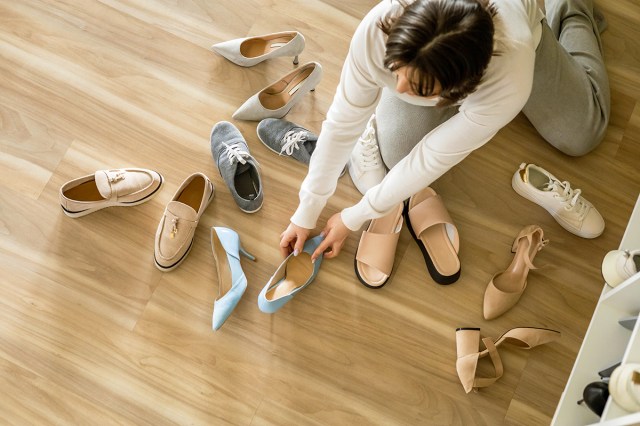
Arrange Your Shoes Like This To Free Up More Closet Space

Trying to squeeze extra storage space out of an already cramped closet can be a daunting task, especially as far as shoe collections are concerned. If your shoe storage is at full capacity and you need to make room for one or two more pairs, there are ways to free up closet space — without having to donate a beloved (albeit gently used) style — and it starts with how you arrange your shoes. Here’s a simple hack for organizing a shoe rack that will free up extra space for more shoes and make everything look orderly and functional.

All featured products and deals are selected independently and objectively by the author. House Outlook may receive a share of sales via affiliate links in content.

Trying to squeeze extra storage space out of an already cramped closet can be a daunting task, especially as far as shoe collections are concerned. If your shoe storage is at full capacity and you need to make room for one or two more pairs, there are ways to free up closet space — without…

First, Add a Shoe Rack to Your Closet

Some professional home organizers recommend getting plastic shoe boxes to store and stack your heels, boots, sneakers, and other styles in your closet. While this can certainly protect your shoes from dust and keep everything neat and tidy-looking, it might not be the best space-saving solution — plus, it’s hard to see what you have. Instead, invest in a two- or three-tiered rack for your closet to organize and display your shoes.

Alternate Your Shoes When Arranging Them

When arranging your shoe rack, the trick to maximizing space on the shelves is to alternate the direction of each shoe. Place one shoe with the toe facing toward the front of the rack and the other shoe with the toe facing the back of the rack. Alternate every shoe on the shelf like this, and you’ll find that you have extra space for an additional pair or two.

Related: This Jean-Hanging Hack Will Make Your Closet Look Like a Boutique

Use Inserts for Maintaining Shape

Some shoes might require a little extra support to keep them upright while stowed away on a rack. For heels, boots, and other styles that need some structure, shop for shoe inserts intended for storage. You can find these in the classic shoe tree style, which are great for boots and sneakers, as well as shoe stuffers, which are essentially bean bags for your shoes and work well with heels, sandals, and wedges.

Advertisement
Michael Nordine
This article is for general informational purposes only.
Affiliate Disclaimer 
|
Financial Disclaimer
Featured Image Credit:  kostikovanata/ Adobe Stock | Updated  Sep 23, 2024 |
Advertisement
Decorating 4m read
0

How To Use the Rule of Three To Decorate Like an Interior Designer

Do you feel stuck arranging (and then rearranging) a shelf that seems sparse or a coffee table that feels crowded? Maybe you’re wrestling with a furniture setup that’s disproportionate or your living room’s color scheme falls flat. To streamline the decorating process, adhere to an easy decor trick that interior designers swear by: the rule of three.

Do you feel stuck arranging (and then rearranging) a shelf that seems sparse or a coffee table that feels crowded? Maybe you’re wrestling with a furniture setup that’s disproportionate or your living room’s color scheme falls flat. To streamline the decorating process, adhere to an easy decor trick that interior designers swear by: the rule…

What Is the Rule of Three?

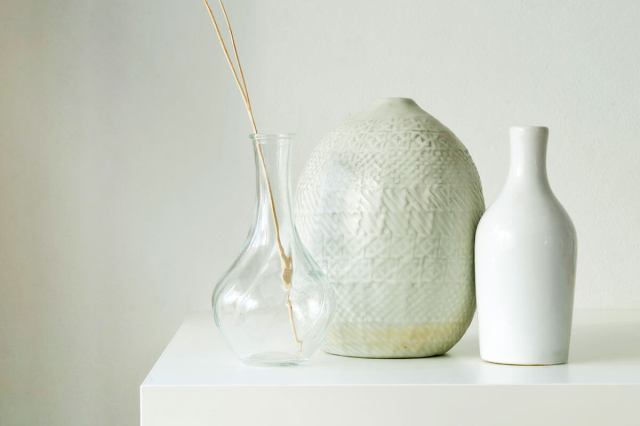
It’s simple. The rule of three is the guideline for arranging items in groups of three. This creates a balanced composition that’s universally visually appealing. Why? Our brains are inclined to recognize patterns, the most basic of which is a group of three. This makes a trio of objects — say, a taper candle, a petite plant, and a framed photo — more engaging and memorable than a grouping of two. Three is interesting without being overwhelming and keeps the eye moving from one object to the next. 

The rule of three can be applied to all aspects of decorating, from a small vignette on a side table to a room’s entire layout. Whether you’re rearranging your living room furniture or hanging family photos, jazzing up a color palette or curious about mixing patterns, it’s a no-fail rule of design. Grouping in three is a trusted technique that’s used beyond interior design, and is also fundamental to photography, art, and graphic design.

Credit: BongkarnThanyakij/ iStock
Advertisement

How To Incorporate the Rule of Three Into Your Home Decor

Style Special Objects

Don’t let your beloved trinkets from travels get lost in a sea of objects scattered on a bookshelf. Grouping decorations in threes unifies various items into an intentional, eye-catching vignette. Consider scale and shape, too. Pair a tall item with a horizontal one and a sculptural piece — that combination is all but guaranteed to look polished and appealing.

Credit: Gal2007/ iStock

Refine Your Furniture Layout

If you have a furniture arrangement that feels off, employ the rule of three. Grouping furniture pieces into trios helps define a space, creating interesting asymmetry. Just think: A couch, an armchair, and a coffee table feels complete, especially when anchored by a rug. Symmetrical arrangements, meanwhile, lack personality and originality.

Credit: imaginima/ iStock
Advertisement

Find a Balance in Artwork

Keep the rule of three in mind as you’re hanging artwork. A pair of photos or paintings looks unfinished, whereas a group of three feels like an intentional set. For a gallery wall, the rule of three can be extended to the rule of five, seven, nine, or even higher. As long as you stick with an odd number, it’ll feel balanced. 

Credit: Rachel Claire/ Pexels
Related: This Easy Hack Makes Cheap Posters Look Like Expensive Works of Art

Improve Color Combinations

If you’ve ever heard of the 60-30-10 ratio in regard to color, you’re already familiar with the rule of three, just in percentage form. Use this interior designer-approved recipe to create a striking color scheme that brings a space to life. 

The most prominent color of your space — for example, the walls’ paint color — should take up 60% of the room. The secondary color, or the 30 in the equation, should complement and contrast the primary shade, adding depth. Use this color for large furniture, such as a a sofa or headboard. Then go wild with the remaining 10%. This is an accent color that adds a punch of personality, and can be introduced through throw pillows, decorative objects, and artwork.

Credit: SeventyFour/ Shutterstock
Advertisement

Mix and Match Pillows

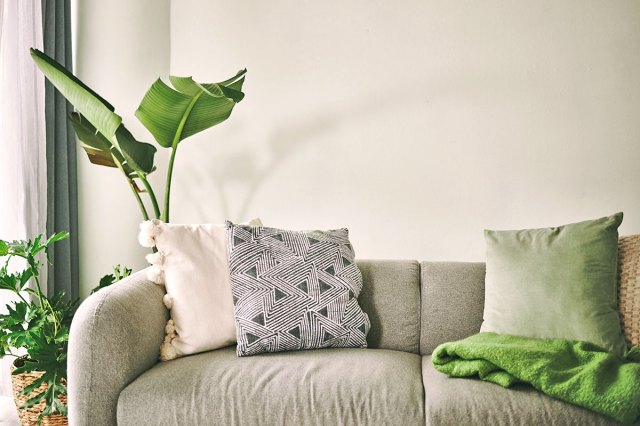
Two pillows aren’t enough, and four is too bulky. Three, once again, is the magic number. Whether you’re playing with pillows on your bed or couch, the arrangement will look more inviting as a trio. On a couch, consider mixing and matching various sizes, shapes, textures, and patterns for a statement-making pillowscape.

Credit: Delmaine Donson/ iStock

Bring the Rule Bedside

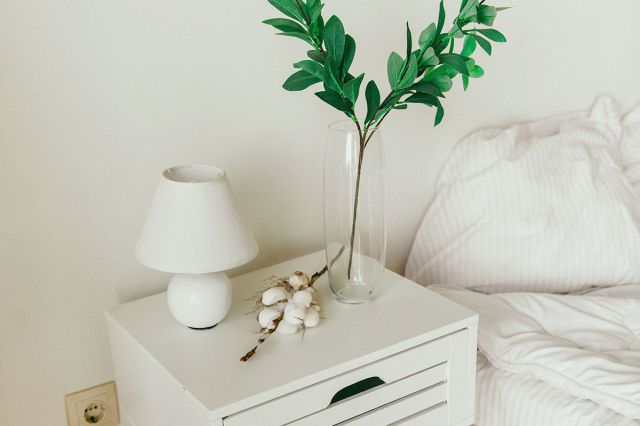
Raise your hand if you’re guilty of cluttering bedside tables with unread books and a week’s worth of water glasses. Start fresh by implementing the rule of three. Clear everything off your bedside table except a group of three utilitarian objects that vary in height, shape, and texture — for instance, a lamp, a vase, and a catchall tray. The visual tranquility will have you sleeping soundly.

Credit: Dmitry Zvolskiy/ Pexels
Advertisement
Megan McCarty
Writer
Megan McCarty is a Los Angeles-based writer who covers the fun stuff: design, travel, wellness, beauty, and fashion. She has written for publications including Domino, The Spruce, MyDomaine, Bustle, and Rue Magazine. Her life rules include, but are not limited to, zipper when merging, contribute to your IRA, and do the nice thing.
This article is for general informational purposes only.
Affiliate Disclaimer 
|
Financial Disclaimer
Featured Image Credit:  Delmaine Donson/ iStock | Updated  Oct 9, 2024 |
Advertisement
Organizing 2m read
0

This Jean-Hanging Hack Will Make Your Closet Look Like a Boutique

It’s an age-old question that many of us have pondered while putting away fresh laundry: Is it better to fold or hang your clothes? The answer is different depending on the garments in question. Items such as bulky sweaters, shorts, and activewear are better off folded and tucked into drawers or shelves, while dresses, jackets, and linens look best hung up. However, there’s one wardrobe staple that can go either way, and that’s a pair of jeans. To fold or not to fold completely depends on your space and personal preference, but if you’d rather hang your jeans, we found a clever hack to make your closet look like it was organized by a pro.

All featured products and deals are selected independently and objectively by the author. House Outlook may receive a share of sales via affiliate links in content.

It’s an age-old question that many of us have pondered while putting away fresh laundry: Is it better to fold or hang your clothes? The answer is different depending on the garments in question. Items such as bulky sweaters, shorts, and activewear are better off folded and tucked into drawers or shelves, while dresses, jackets,…

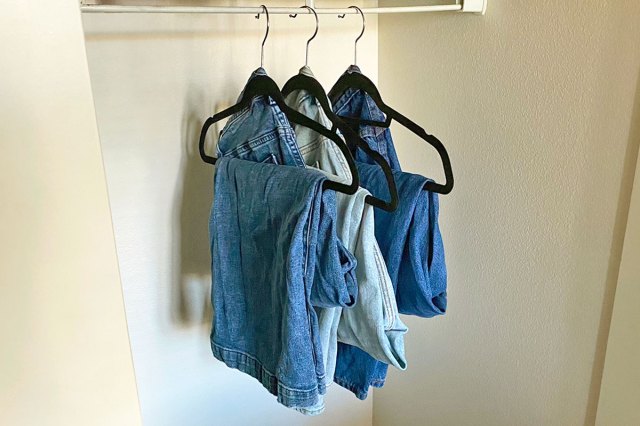
Perfectly hung denim starts with a matching set of hangers, specifically those with a flocked velvet coating and crossbar. Flocked hangers are preferred as they are nonslip and space-saving. With a slimmer design, you can squeeze more clothes into your closet — and who doesn’t want that?

Using an appropriate hanger, take your jeans and fold them in half vertically with the back pockets facing out. Starting from the bottom, slip the legs of the jeans through the hanger, stopping about one-third of the way up. Hook the backside belt loop over the neck of the hanger, and there you have it. Make your way through the rest of your denim collection and watch as this hack completely changes how you organize your wardrobe.

Related: Why You Should Have Two Different Laundry Hampers

Hanging your jeans this way keeps them looking neat and tidy and is also incredibly easy to master. It can prevent them from creasing or wrinkling, making it easy to grab-and-go without having to steam or iron your favorite pair of kick flares. In a matter of minutes (or longer, depending on how many pairs of jeans you have), you can create a closet that feels like a high-end denim boutique.

Advertisement
Pauline Lacsamana
Writer
Pauline Lacsamana is a freelance writer and editor who specializes in commerce, home, design, and lifestyle. She has bylines in The Spruce, Business Insider, U.S. News & World Report, Hunker, MyDomaine, Parade, and more.
This article is for general informational purposes only.
Affiliate Disclaimer 
|
Financial Disclaimer
Featured Image Credit:  Zoie Griffin/ Staff Photo Editor | Updated  Sep 20, 2024 |
Advertisement
Food & Drink 6m read
0

9 Nutritious Nonperishable Foods To Stock for Emergencies

Natural disasters can strike at any time, often with little or no warning. Even when meteorologists are able to issue early warnings, the public response is often panic buying — leaving grocery store shelves near-empty and bottled water nowhere to be found. When these unlikely events occur, all you can do is be as prepared as possible. This includes having a fully stocked pantry with plenty of nutritious and nonperishable foods. These long-lasting provisions can help you get by until your life returns to normal. Here are a few essentials you should have on hand, just in case.

Natural disasters can strike at any time, often with little or no warning. Even when meteorologists are able to issue early warnings, the public response is often panic buying — leaving grocery store shelves near-empty and bottled water nowhere to be found. When these unlikely events occur, all you can do is be as prepared…

Canned Tuna

Canned tuna can last for up to several years if kept in a cool, dark place, making it one of the better emergency foods available. Each tin of tuna is loaded with protein to keep you energized, and plenty of healthy omega-3 fatty acids for eye and brain health. Tinned tuna is versatile as well, and can be enjoyed in a sandwich, salad, pasta dish, or even straight out of the can if your supplies are limited. If you’re not a fan of tuna, canned salmon and chicken are suitable substitutes.

Credit: Towfiqu barbhuiya/ Pexels via Getty Images

Dried Fruit

Fresh fruit can go bad in a matter of days, especially if you’re currently without refrigeration. But dried fruit can provide you with essential nutrients for weeks, if not months. Pick up a bag of dried fruit — preferably one without added sugars, as those could cause dehydration. Also get a package that’s easy to reseal, as a tight seal can keep the dried fruit fresher until things return to normal.

Credit:  Polina Tankilevitch/ Pexels
Advertisement

Protein Bars

Protein, granola, and cereal bars are the perfect handheld snack for staying energized when you’re digging your car out of 10 feet of snow. They’re also kid-friendly, and for the most part, not messy. They’ll keep you feeling full and can even be used as a meal replacement if necessary. When shopping for bars that pack a nutritional punch, look for options with high protein content (10 grams or more), no added sugars, and low carbohydrates (under 20 grams).

Credit: Towfiqu barbhuiya/ Pexels

Peanut Butter

Peanut butter is rich in healthy fats and touts plenty of protein, making it a great item to keep on hand in case of emergency. Unopened commercial peanut butter can last six to nine months at room temperature. Once opened, it will remain safe to eat for two to three months. In these situations, it’s best to avoid natural peanut butter, which doesn’t contain stabilizers and needs to be refrigerated. Peanut butter is delicious whether you’re vegan, vegetarian, or a meat eater. Enjoy it straight from the jar, on crackers or toast, or in a creamy sauce for noodles.

Credit: Lisa Fotios/ Pexels
Advertisement

Bottled Water

Some emergency situations result in contaminated or no running water, which may mean you’ll have difficulty finding water that’s suitable to drink. This is why you should always have an emergency supply of bottled water. Experts recommend having a three-day supply of bottled water on hand, which equates to around a gallon per day for each person in the household. This water can be used for drinking, cooking, bathing, or brushing your teeth until the communal water is safe to drink again.

Credit: SimpleImages/ Moment via Getty Images

Trail Mix

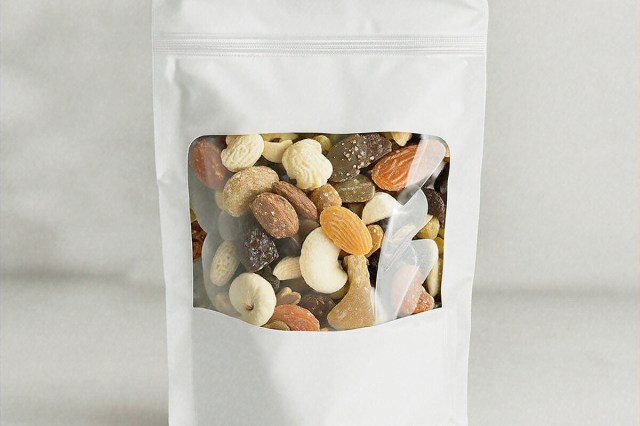
Most bags of trail mix contain nuts that’ll keep you full of energy, which can be especially helpful if you’re running around after an emergency. Just try to avoid trail mix that contains a lot of candy, as sugary treats may dehydrate you and make you feel worse. Shop for trail mixes that come in resealable bags, which can keep the contents fresher for longer.

Credit: Shutterstock
Advertisement

Rice and Beans

Cans of beans and bags of rice are easy to cook when your supplies and appliances are limited, so long as you have access to an open flame or another heat source. Beans are full of protein and essential minerals such as iron and potassium, while rice has plenty of carbs to provide the body with energy. Even better, beans and rice last for a long time, so they’ll be readily available whenever an emergency strikes.

Credit: Unsplash+ via Getty Images

Energy Drinks

Not only is it critical to have drinking water, but energy drinks can also help replenish essential fluids and electrolytes. Keep a few bottles of Gatorade or Powerade handy to provide fuel when a disaster hits. You can also purchase electrolyte drink powders or tablets, such as Liquid IV, LMNT, or Nuun, which you can add to a glass of water for a boost of hydration whenever you need it.

Credit: Zaruna/ Shutterstock
Advertisement

Pet Food

Don’t forget about your fur babies in an emergency situation. While you may like giving them freshly cooked steaks fit for a human, sometimes (as in the event of a natural disaster) you simply don’t have the means. Be sure to have a backup supply of cans or bags of pet food handy. Dry pet food can last up to a year and a half if properly sealed, so purchase a big bag and keep it tucked away in a cool, dry place just in case. Unopened canned food can be eaten by your pet up to two years after its manufacturing date and also can help keep your dog or cat hydrated.

Credit: pedphoto36pm/ Shutterstock

Nonperishable foods are good to have on hand whether you’re preparing for hurricane season or need a quick dinner made from pantry staples. To make it easier on your wallet, pick up a few extra items every time you shop for groceries. While most disasters are unlikely to require more than a three-day food supply, stocking your pantry for two weeks of nutritious meals is even better.

Advertisement
Bennett Kleinman
Staff Writer
Bennett Kleinman is a New York City-based staff writer for Optimism Media, covering topics for several brands including House Outlook and Better Report. He previously contributed to television programs such as "Late Show With David Letterman" and "Impractical Jokers," and digital publications like The Onion. Bennett is also a devoted New York Yankees and New Jersey Devils fan, and thinks plain seltzer is the best drink ever invented.
This article is for general informational purposes only.
Affiliate Disclaimer 
|
Financial Disclaimer
Featured Image Credit:  Unsplash+ via Getty Images | Updated  Sep 26, 2024 |
Advertisement
Decorating 3m read
0

This Easy Hack Makes Cheap Posters Look Like Expensive Works of Art

Filling your home with artwork can be expensive. Adding a gallery wall here, an oversized landscape there, and a smattering of matted family photos in between can easily cost hundreds or even thousands of dollars. To spare your budget, try turning an inexpensive poster into a pricey-looking piece of art — all for only a few dollars and just as many minutes.

All featured products and deals are selected independently and objectively by the author. House Outlook may receive a share of sales via affiliate links in content.

Filling your home with artwork can be expensive. Adding a gallery wall here, an oversized landscape there, and a smattering of matted family photos in between can easily cost hundreds or even thousands of dollars. To spare your budget, try turning an inexpensive poster into a pricey-looking piece of art — all for only a…

What You'll Need

• Printed artwork, such as a floral still life or landscape, of any size

• Bottle of matte Mod Podge

• Thrifted frame, no glass necessary

• Medium-size, flat paint brush

For a personalized touch, choose an image that represents something or somewhere meaningful to you. For instance, a field of tulips could commemorate a beloved trip to Amsterdam, or a bucolic landscape may remind you of spending childhood summers at your grandparents’ farm. Etsy has plenty of digital images to shop, which you can then print on high-quality photo paper, either at home or at a drugstore.

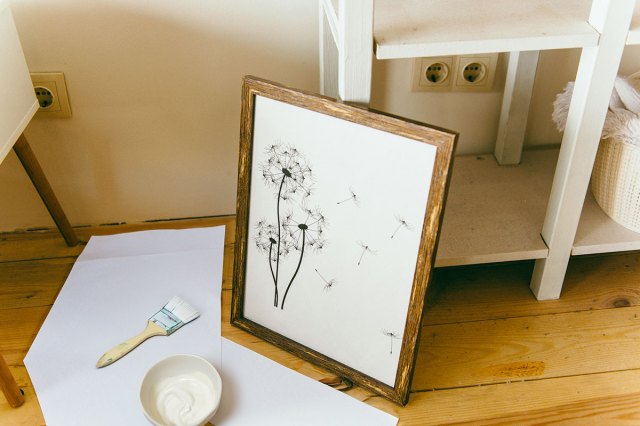
Once you’re ready to make your masterpiece, clear a crafting area slightly bigger than your artwork and lay down butcher paper or newspaper to cover the area. Place the artwork on the paper and wipe the image with a microfiber cloth to ensure no dust is sticking to the surface. Then, apply a thin coat of matte Mod Podge to the picture, using short, crisscross strokes with a flat paint brush. Set the artwork aside to let it dry out of the reach of children and pets.

After waiting 24 hours for the Mod Podge to dry completely, apply a thicker second coat using the same painting technique. Crosshatched brush strokes create depth, simulating shadows and adding texture to bring a three-dimensional feel to a once-flat image. 

Advertisement

After the second coat is dry, it’s time to frame your new art. It’s best to pair these images with not-so-new frames, so try scouring a local vintage shop for wood or gold frames. Goodwill is full of them, and depending on where you live, your neighborhood sidewalks also may be a treasure trove of found frames — especially around the end of the month, when people tend to move. Whichever frame you choose, be sure to remove the glass. That’ll look more realistic and emphasize the texture of your new artwork.  

What was once a flat, printed image could now pass for an expensive piece of art. Your budget will thank you.

Advertisement
Megan McCarty
Writer
Megan McCarty is a Los Angeles-based writer who covers the fun stuff: design, travel, wellness, beauty, and fashion. She has written for publications including Domino, The Spruce, MyDomaine, Bustle, and Rue Magazine. Her life rules include, but are not limited to, zipper when merging, contribute to your IRA, and do the nice thing.
This article is for general informational purposes only.
Affiliate Disclaimer 
|
Financial Disclaimer
Featured Image Credit:  Dmitry Zvolskiy/ Pexels | Updated  Sep 23, 2024 |
Advertisement
Home Improvement 5m read
0

Helpful Hacks To Lower Your Heating Costs During the Colder Months

As the colder months approach, you’ll probably be running your home’s heater more than you’re comfortable with. Gas and electric bills tend to skyrocket in the fall, winter, and early spring, and limiting heater usage can help you cut costs.

All featured products and deals are selected independently and objectively by the author. House Outlook may receive a share of sales via affiliate links in content.

As the colder months approach, you’ll probably be running your home’s heater more than you’re comfortable with. Gas and electric bills tend to skyrocket in the fall, winter, and early spring, and limiting heater usage can help you cut costs.

Don’t worry, we’re not here to suggest wearing long underwear or setting your thermostat to 60 degrees — although according to the U.S. Department of Energy, you can save up to 10% on heating costs by lowering the temperature 8 to 10 degrees for eight hours per day.

There are several tricks that can keep your house warm while still conserving energy when the temperature drops. Some require a bit of investment, but any money spent will ultimately help lower your gas and electric bills. And staying warm while saving money is a win for your wallet. Here are six reasonable hacks for keeping your house warm that don’t involve cranking up the heat.

Fill Window Cracks With Caulk

Gaps around windows let heat out and cool air in during the colder months, which may cause your energy bill to balloon. Small cracks and gaps can be filled with caulk. To find those areas, feel around for wind blowing through and look for crumbled caulk or cracks in the window trim and seams. You can also use a lit incense stick or candle (keeping a safe distance from any flammable items) to identify drafts. Remove the existing caulk and clean the area, allowing it to dry completely before applying fresh caulk with a caulking gun. Use a putty knife or a wet fingertip to smooth the silicone and apply more if it shrinks after drying. Bonus: Caulking can also be beneficial in the summer to keep the heat out.

Credit: BanksPhotos/ iStock
Advertisement

Invest in Thermal Curtains

Thermal curtains look just like regular curtains, except they’re designed to insulate your windows, keeping cold air out in the colder months and warm air out in the warmer months. They also double as blackout curtains, which is a perk for light-sensitive sleepers. Thermal curtains may sound like they would be an eyesore, but there are plenty of chic and trendy colors, patterns, and textures to choose from.

Credit: valemaxxx/ Shutterstock
Related: Fix Carpet Dents Overnight With This $0 Hack

Run a Humidifier

Using a humidifier in the winter can make your home feel warmer by adding moisture to the air. While it won’t raise the temperature of a room, a humidifier will balance the moisture levels and hold on to heat better. Beyond keeping you cozy, a humidifier can help prevent dry skin, reduce airborne virus transmission, and protect hardwood floors from gapping and cracking.

Credit: Svetlana Khutornaia/ Shutterstock
Advertisement

Use Window Film

Air makes a good insulator, so window film is a great way to maintain the temperature of your home when the mercury plummets. When window film is applied, the air trapped between the glass and the film adds a layer of insulation between the cold glass and the interior of your home. The window film you purchase will come with instructions as to how to apply it, but it’s generally a pretty quick and painless job. If you pull the window film taut (using a hair dryer helps make it more pliable) and trim the excess, you’ll be able to open the window as normal. Opt for transparent window film if you want to let the sun in, or frosted if you’re looking to add privacy.

Credit: Petr Smagin/ Shutterstock
Related: Your Utensil Drawer Holds the Secret to Perfectly Hung Pictures

Place Draft Stoppers in Front of Doors

You can buy a good set of draft stoppers for less than $20, and although they won’t fully weatherproof your home, they can significantly reduce heat loss through door cracks. Most draft stoppers available for purchase are made from foam or silicone and easily slip under the bottom of a door. You can also DIY them using fabric and a weighted filling such as pebbles, beads, or even cat litter.

Credit: Andrey_Popov/ Shutterstock
Advertisement

Get a Smart Thermostat

Buying a smart thermostat might set you back a bit when it comes to price, but it’ll pay off when you get your bill. The intelligent component of the thermostat will learn your temperature preferences and establish a schedule that automatically switches to energy-saving temperatures when you’re asleep or away. A study by ENERGY STAR found that smart thermostats certified by the government-backed program save households about 8% on their heating and cooling bills. A smart thermostat can replace a regular one, but the installation can be a bit more complex, so you may need to hire a professional electrician.

Credit: Monkey Business Images/ Shutterstock

Any combination of these hacks can make your house feel warmer this winter without you needing to pile on layers or huddle around a space heater. By making a few easy improvements and spending strategically, you can lower your heating costs and hunker down in cozy comfort.

Advertisement
Jill Layton
Writer
Jill Layton started writing professionally when she realized her emails and texts were kinda funny. She’s an affiliate shopping writer and lifestyle contributor for Scary Mommy, Bustle, Mic, and Best Products. She’s the mom of two alarmingly witty kids and the world’s most perfect dog.
This article is for general informational purposes only.
Affiliate Disclaimer 
|
Financial Disclaimer
Featured Image Credit:  Monkey Business Images/ Shutterstock | Updated  Sep 23, 2024 |