Advertisement
Home Improvement 3m read
0

How To Silence a Squeaky Door Hinge

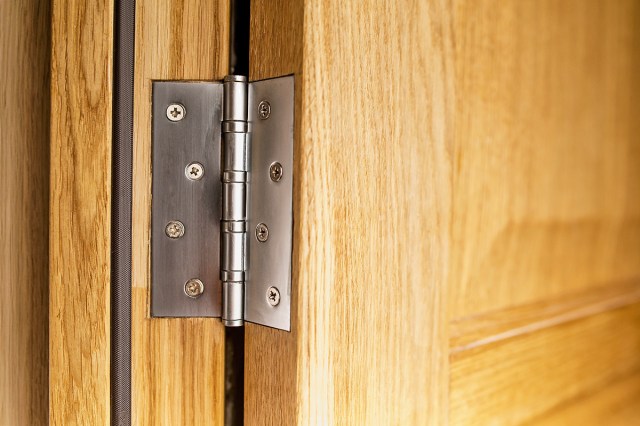
Heard a squeak? There are a few potential culprits to rule out. The best-case scenario is your dog playing enthusiastically with a plush toy; the worst (in our opinion) is a mouse problem. But there’s a third option, too, and it’s an annoying one that happens far too often — a squeaky door hinge. The more a door is opened and shut, the more prone its hinges are to creaking. As infuriating as these high-pitched squeaks can be, though, there’s a quick, simple, and mess-free solution for this problem.

All featured products and deals are selected independently and objectively by the author. House Outlook may receive a share of sales via affiliate links in content.

Heard a squeak? There are a few potential culprits to rule out. The best-case scenario is your dog playing enthusiastically with a plush toy; the worst (in our opinion) is a mouse problem. But there’s a third option, too, and it’s an annoying one that happens far too often — a squeaky door hinge. The…

Rub-A-Dub-Dub

When most people hear a creaky door, they reach for a canister of cooking spray or WD-40 and spray the hinge. While this usually silences the hinge, it leaves a greasy residue that can potentially damage wood or paint, or attract unwanted pests.

Instead of risking damage with spray-on oils, we turn to a solution brought to our attention by TikTok creator @ken.c.long, who recommends using a bar of soap. A dye-free, fragrance-free bar of soap, such as a Dove Beauty Bar, is an excellent tool for fixing creaky door hinges.

Related: A Fast Fix for Stripped Screws

Simply rub the bar along the outside of any squeaky hinges; this pushes soap into the cracks, leaving them sufficiently lubricated. Once you’ve done that, use a clean rag to wipe away the excess soap. Finally, move the door back and forth several times to work the soap into the hinges. Follow these steps and the squeak should disappear in no time.

Advertisement

More Brilliant Bar Soap Hacks

You can also use a bar of soap to lubricate sliding drawers and keep them from jamming. Let’s say your junk drawer keeps getting caught every time you open it. Take the bar of soap and rub it along the sliding runners — just be careful not to cut yourself, as these runners can be sharp. Gently wipe off any extra soap, and the drawer should open and close smoothly.

Soap can even help lubricate a pesky clothing zipper that keeps getting caught on a pair of jeans or your favorite jacket. Glide the bar of soap over the zipper teeth to lubricate them, then brush away the excess. The soap should make the zipper slide much more easily, so you’ll no longer have to worry about getting it caught halfway.
Advertisement
Bennett Kleinman
Staff Writer
Bennett Kleinman is a New York City-based staff writer for Optimism Media, covering topics for several brands including House Outlook and Better Report. He previously contributed to television programs such as "Late Show With David Letterman" and "Impractical Jokers," and digital publications like The Onion. Bennett is also a devoted New York Yankees and New Jersey Devils fan, and thinks plain seltzer is the best drink ever invented.
This article is for general informational purposes only.
Affiliate Disclaimer 
|
Financial Disclaimer
Featured Image Credit:  Artsiom Kuchynski/ Adobe Stock | Updated  Apr 21, 2025 |
Advertisement
Decorating 3m read
0

How Enclosure Theory Makes Spaces Instantly Cozier

Even when the thermostat is set to 68 degrees, some spaces still feel chilly. Picture a barren doctor’s office with overhead lighting and sparse, soulless furniture. Compare that discomfort with the sense of ease you feel when relaxing under a tree. You want to recreate that warm, protected atmosphere at home — it should feel more like an afternoon reading under a weeping willow than a morning spent in a sterile waiting room. The good news? You can achieve this with a simple (yet profound) design principle.

All featured products and deals are selected independently and objectively by the author. House Outlook may receive a share of sales via affiliate links in content.

Even when the thermostat is set to 68 degrees, some spaces still feel chilly. Picture a barren doctor’s office with overhead lighting and sparse, soulless furniture. Compare that discomfort with the sense of ease you feel when relaxing under a tree. You want to recreate that warm, protected atmosphere at home — it should feel…

The secret to a cozier space is a concept interior designer Hans Lorei calls “enclosure.” Take a chair, for example. By itself, a single chair is isolating. But add a lamp next to it, enclosing one side, and it instantly becomes more inviting. Place a drink table on the other side and a footstool in front — more layers of enclosure — and suddenly it’s a haven. This is why alcove and canopy beds are so comforting, and why open floor plans are sometimes too open, creating an unwelcoming feeling.

Related: 8 Clever Design Tips for a Cozy Space Without Clutter

Interior designer Kathy Kuo also swears by this approach. “My primary goal with all of my design clients is to help them feel safe, loved, and nurtured in their homes,” Kuo says. “Enclosure theory really speaks to the heart of that ethos.” Beyond its emotional impact, enclosure has practical benefits, too. “An armchair with a floor lamp on one side and a side table on the other is going to serve you much better — especially when you want to sit down with a book or a mug of coffee — than it would if all of those pieces were in isolation,” Kuo adds.

Advertisement

How To Incorporate Enclosure Theory Into Every Room of Your Home

Dining Room: Hang a pendant light above the table to enclose it from above, while dining chairs surround it on all sides.

Living Room: Use a console table behind the sofa for back enclosure and a coffee table in front to anchor the space. For a reading nook, try enclosing a chair with a tall plant and a small side table.

Bedroom: Nightstands on either side of the bed act like bookends. A headboard and footboard add to the cocoon-like effect.

Patio: An umbrella over outdoor seating not only offers shade but also creates a defined, comforting zone.

Studio: In open-concept spaces, room dividers provide a sense of intimacy.

Office: Position a bookshelf beside a desk to carve out a supported workspace.

Remember: If you’re feeling exposed, get enclosed. It’s a small shift that can make a significant emotional difference.

Advertisement
Megan McCarty
Writer
Megan McCarty is a Los Angeles-based writer who covers the fun stuff: design, travel, wellness, beauty, and fashion. She has written for publications including Domino, The Spruce, MyDomaine, Bustle, and Rue Magazine. Her life rules include, but are not limited to, zipper when merging, contribute to your IRA, and do the nice thing.
This article is for general informational purposes only.
Affiliate Disclaimer 
|
Financial Disclaimer
Featured Image Credit:  Curtis Adams/ Pexels | Updated  Apr 17, 2025 |
Advertisement
Decorating 5m read
0

12 Design Tricks To Make a Small Room Feel More Spacious

Small spaces can be both charming and challenging. Whether you’re working with a compact bedroom or a tight living space, the key to making the most of limited square footage is to trick the eye. If you’ve already applied tried-and-true tricks such as adding mirrors and painting the walls light colors, it’s time to up your design game.

All featured products and deals are selected independently and objectively by the author. House Outlook may receive a share of sales via affiliate links in content.

Small spaces can be both charming and challenging. Whether you’re working with a compact bedroom or a tight living space, the key to making the most of limited square footage is to trick the eye. If you’ve already applied tried-and-true tricks such as adding mirrors and painting the walls light colors, it’s time to up…

Read on for 12 interior designer-approved tips for making a small space feel comfortable, not cramped.

1. Find the Right Scale

Proper scale is key in a small space, says Kathy Kuo, founder and CEO of Kathy Kuo Home. Consider a loveseat instead of a full-sized sofa, or a set of ottomans instead of a bulky coffee table. “Working with slightly smaller pieces will help make the room feel more balanced,” Kuo says. “You’ll have more breathing room, and the space will feel very intentional.”

Credit: svetikd/ iStock

2. Choose Furniture With Low Profiles

Incorporating light-looking, open designs helps too, according to interior designer Kelsey Deirdre. She recommends selecting furniture with a low profile and sleek lines, such as a minimalist sofa or a glass coffee table. “These pieces don’t overwhelm the space, leaving more visual room for the eye to roam,” Deirdre says.

Related: Follow This Design Rule for Better Flow in Your Space

3. Add Negative Space

Instead of pushing everything against the walls, interior designer Amanda Riera of Studio Chroma suggests floating a few pieces of furniture, such as a curved chair or pedestal table, to create a sense of breathing room. “The negative space around furniture can be just as powerful as the furniture itself,” Riera says.

Credit: Drazen_/ iStock
Advertisement

4. Go Tone-on-Tone With Textures

Interior designer Catherine Shuman of The Intentional Design Studio suggests layering similar tones with a mix of natural materials. Think linen, rattan, stone, and wool. This creates visual interest without overwhelming the space. “It keeps things calm but far from boring,” Shuman says.

5. Create a Focal Point

In small spaces, Shuman says establishing a strong focal point — such as a bold piece of art, a sculptural light fixture, or a styled bookcase — can anchor the room, making it feel more intentional and less compact.

Credit: Tina Park/ Unsplash

6. Make It a Jewel Box

Lean into the coziness of a small space by wrapping the entire room in one continuous finish. Paint or wallpaper everything (including walls, ceiling, and trim) in the same tone or texture, such as high-gloss paint, limewash, or even fabric. It might sound counterintuitive, says Sonia Maguiña of Studio Chroma, but enveloping a room erases harsh edges and visual breaks so it feels less small and more styled.

Advertisement

7. Keep Floors Clear

Whenever possible, Shuman advises opting for wall-mounted storage, floating nightstands, or sconces to free up visual space at floor level. “It’s a subtle shift that makes the room feel more open and breathable,” Shuman says.

Credit:  Aleksey/ iStock

8. Play With Contrast

Interior designer Stephanie Mahaney from Stephanie Rae Interiors recommends using contrast strategically. In a recent project, she applied a darker plaster in a cozy TV room next to two small bedrooms finished in a soft, creamy plaster. “The difference in tone made the bedrooms feel noticeably brighter and more spacious — proof that contrast can be just as effective as light paint when used thoughtfully,” Mahaney says.

Related: The Interior Design Trick That Makes Any Room Look Bigger

9. Give the Space a Purpose

It’s easy for small spaces to become a catchall of purposes. Perhaps you’re sitting in an office/playroom/library/storage room right now. Giving the space a clear identity will not only help you get rid of clutter that doesn’t belong but also set an intention for the space. “Whether it’s a reading nook, meditation space, or creative corner, having a defined purpose adds depth and belonging to even the tiniest rooms,” Shuman says.

Credit: Spacejoy/ Unsplash
Advertisement

10. Anchor the Space With a Rug

A properly proportioned rug is crucial in any living space and should extend beyond the furniture to visually unify the elements within a room. “This creates a sense of grounding, making the space feel anchored rather than fragmented,” interior designer Jude Kamal of Sansa Interiors explains.

11. Choose Organic Shapes and Curves

Steer away from sharp, boxy furniture. Instead, opt for rounded pieces, arched accents, and curved lighting fixtures. Soft lines help the eye move more fluidly through a room, making the space seem larger and more inviting, Shuman says.

Credit: toondelamour/ iStock

12. Layer Lighting

Pendants and sconces and lamps, oh my! A thoughtful mix of lighting elements eliminates dark corners and adds dimension. Not only does this brighten the room, but it also creates a balanced atmosphere that appears open and grounded.

Advertisement
Megan McCarty
Writer
Megan McCarty is a Los Angeles-based writer who covers the fun stuff: design, travel, wellness, beauty, and fashion. She has written for publications including Domino, The Spruce, MyDomaine, Bustle, and Rue Magazine. Her life rules include, but are not limited to, zipper when merging, contribute to your IRA, and do the nice thing.
This article is for general informational purposes only.
Affiliate Disclaimer 
|
Financial Disclaimer
Featured Image Credit:  Yevhenii Deshko/Unsplash+ | Updated  Apr 15, 2025 |
Advertisement
Organizing 3m read
0

This Ziploc Bag Trick Doubles Storage Instantly

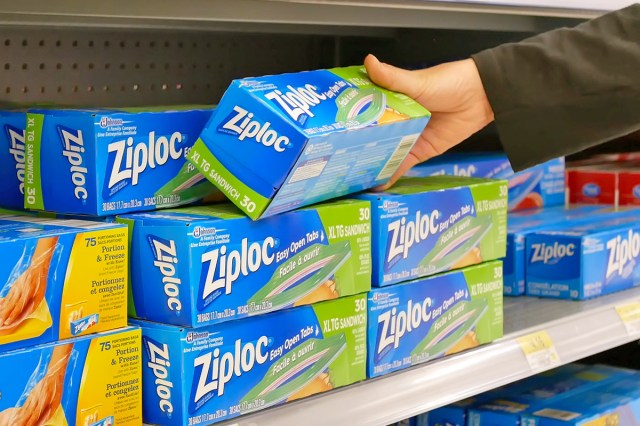
Storage is a constant struggle for any home cook, whether it’s finding space for all your pots and pans or utilizing every last inch of the fridge’s cheese drawer. The same can be true when trying to cram large items — think baguettes, dried spaghetti, or celery stalks — into Ziploc bags that are too small.

All featured products and deals are selected independently and objectively by the author. House Outlook may receive a share of sales via affiliate links in content.

Storage is a constant struggle for any home cook, whether it’s finding space for all your pots and pans or utilizing every last inch of the fridge’s cheese drawer. The same can be true when trying to cram large items — think baguettes, dried spaghetti, or celery stalks — into Ziploc bags that are too small.

While they make Ziploc bags in a variety of shapes and sizes, you might be fresh out of the larger ones and need to make do with what you have on hand. The good news is there’s a simple way to double the storage capacity of a Ziploc bag in a matter of moments.

Seal Two Bags Together

TikTok creator Jacqueline Stein (@home_reimagined) enlightened us about this helpful hack. However, keep in mind that it only works for Ziploc bags with press-to-close seals, not those with sliders.

For this hack, you’ll need two Ziploc bags, one of which should be turned inside out. Take the inside-out bag, flip it upside down, and align its seal with the corresponding seal of the other, right-side up bag. We tested this hack with Ziploc freezer quart bags, which feature a pink seal designed to interlock with a blue seal on the other side. This makes lining them up foolproof — just look for the opposite color.

Related: 10 Chef-Approved Storage Hacks To Make Food Last Longer

When those seals are matched up, press down to secure both bags together, creating a singular storage bag that’s doubled in size. This method allows you to store all sorts of oversized items, including paintbrushes, pipe cleaners, and rolled-up posters.

Advertisement

How To Halve the Size of Ziploc Bags

On the other hand, sometimes Ziploc bags are way too big, like when you want a tiny pouch to carry snacks. TikTok creator Dustin Hadley (@that40yearguy) brought our attention to a solution for this very problem, though it requires sharp objects, open flames, and extra caution.

Take a sharp knife and heat the edge over a flame for 10 to 20 seconds. You can use an open flame on a gas range, the fire of a glowing candle, or even a handheld lighter. Lay the Ziploc bag flat on a cutting board, then take the knife and carefully slice down the center, from top to bottom, in a steady, continuous motion.

During this process, the heat from the knife will seal the plastic together on both sides, creating two smaller storage bags of identical size. This seal may not be airtight, so we wouldn’t recommend storing any liquids inside. But it’s perfect for toting around dry snacks such as chips or pretzels.

Advertisement
Bennett Kleinman
Staff Writer
Bennett Kleinman is a New York City-based staff writer for Optimism Media, covering topics for several brands including House Outlook and Better Report. He previously contributed to television programs such as "Late Show With David Letterman" and "Impractical Jokers," and digital publications like The Onion. Bennett is also a devoted New York Yankees and New Jersey Devils fan, and thinks plain seltzer is the best drink ever invented.
This article is for general informational purposes only.
Affiliate Disclaimer 
|
Financial Disclaimer
Featured Image Credit:  Happy Hues/ Adobe Stock | Updated  May 2, 2025 |
Advertisement
Decorating 3m read
0

Try This Hack Before Committing to a Paint Color

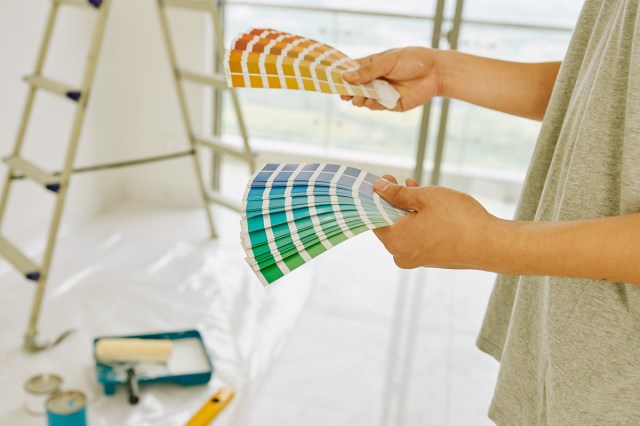
Picture this: You’re in a home improvement store, staring at a wall of paint chips. Do you feel overwhelmed just thinking about it? Choosing between pistachio versus seafoam, cream versus ecru, or mocha versus taupe can be daunting, especially since paint colors often look different when applied to walls.

All featured products and deals are selected independently and objectively by the author. House Outlook may receive a share of sales via affiliate links in content.

Picture this: You’re in a home improvement store, staring at a wall of paint chips. Do you feel overwhelmed just thinking about it? Choosing between pistachio versus seafoam, cream versus ecru, or mocha versus taupe can be daunting, especially since paint colors often look different when applied to walls.

Before committing to a gallon, try this easy hack to ensure you’ll love the shade on your walls in the morning light, the afternoon glow, and all the moments in between. Instead of painting sample colors directly onto your walls, consider using foam boards as a clever alternative.

Why Use Foam Boards?

Painting sample colors directly on your walls can create a patchy surface, especially if you want to test colors before executing all the painting prep work, including washing, patching, sanding, and priming. Foam boards, meanwhile, provide a smooth, neutral background that you can move throughout the room at different times of the day. This way, you’ll know exactly how that mauve looks at sunset or if that gray’s blue undertones come out at high noon. The foam board method can be especially helpful if you’re wavering between several shades, because you can observe them side by side without creating a patchwork of colors on your walls.

Related: Use This Designer Paint Trick To Fake Higher Ceilings
Advertisement

Prep the Foam Boards

Buy one full-sized foam board per paint color you’re testing. Standard sizes vary by brand, but choose one that’s at least 16 by 20 inches — a big upgrade (literally) from the tiny paint chips you collect at the store. Most foam boards come in white, but if you buy them in off-white or a darker color, be sure to prime them first. Then, apply two coats of paint to the foam board, just as you would on a wall. Let each coat dry completely before judging the color, as some paint colors subtly change as they cure.

Experiment With the Foam Boards

Once the foam boards are dry, place them against different walls in the room. Move them throughout the day to see how natural and artificial light affect the hues. Position them near all of the room’s main features: furniture, flooring, and artwork. Continue to move the boards around for 24 to 48 hours before making a final decision.

Advertisement
Megan McCarty
Writer
Megan McCarty is a Los Angeles-based writer who covers the fun stuff: design, travel, wellness, beauty, and fashion. She has written for publications including Domino, The Spruce, MyDomaine, Bustle, and Rue Magazine. Her life rules include, but are not limited to, zipper when merging, contribute to your IRA, and do the nice thing.
This article is for general informational purposes only.
Affiliate Disclaimer 
|
Financial Disclaimer
Featured Image Credit:  DragonImages/ iStock | Updated  Apr 15, 2025 |
Advertisement
Organizing 4m read
0

Tips and Tricks for a Successful Garage Sale

When organizing a garage sale, you likely have two main goals: to get rid of clutter and to make some extra cash. And while it’s entirely possible to put a garage sale together without much forethought, being intentional with the overall organization from the start can contribute to your sale’s success — and make it much easier for customers to shop your secondhand goods.

All featured products and deals are selected independently and objectively by the author. House Outlook may receive a share of sales via affiliate links in content.

When organizing a garage sale, you likely have two main goals: to get rid of clutter and to make some extra cash. And while it’s entirely possible to put a garage sale together without much forethought, being intentional with the overall organization from the start can contribute to your sale’s success — and make it…

From cleaning items to figuring out your display, here are some tips and tricks for a successful garage sale. The best part? You can use items you already have — or items you’re planning to sell — to help you achieve a more organized and efficient garage sale setup.

How To Organize Your Garage Sale

Clean Your Items

Apart from collecting the items you want to sell, giving them a thorough cleaning is one of the most important steps you can take, because people are more likely to purchase items that look well maintained. Make sure to launder all clothing and blankets, wipe down furniture, dust off books, and run kitchenware through the dishwasher to keep things sanitary. Some items — such as scorched pots and pans — might require a little elbow grease, but this attention to detail will pay off.

Credit: Wachiwit/ iStock

Organize by Categories

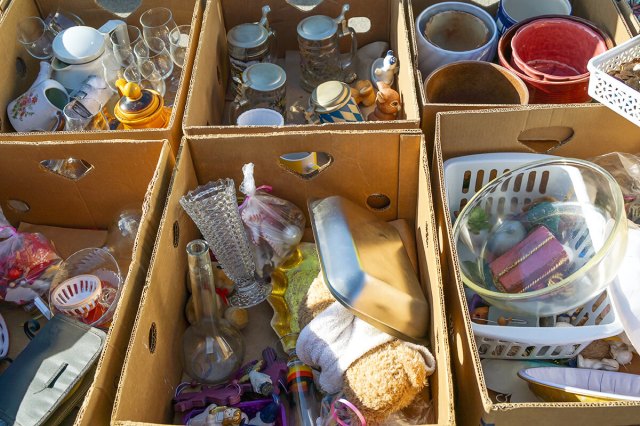
After ensuring everything is as clean as possible, sort your items into categories to present an organized display on the day of the garage sale. You can pile items in your garage on a clean surface or keep them in boxes for easy transport.

Organizing your garage sale items by category not only benefits you with a neatly arranged display, but also helps customers browse specific items such as housewares or clothing.

Credit: Maren Winter/ iStock
Advertisement

Design Your Display

Once you have everything sorted into categories, consider how you want to display your items. Most clothing can be hung on a garment rack so customers can easily see and flip through what you’re selling. If you have wearable accessories, consider how you might display those, too. You can use a hat or coat rack to showcase your hats, scarves, and handbags. Repurpose a shoe rack from your home to present shoes and boots, or lay them flat on a tablecloth, grouped by size.

Related: 5 Tips for Finding Home Decor Treasures at Thrift Stores

For other categories, tables are essential for effective garage sale organization. Instead of spreading your home decor, small kitchen appliances, and other wares across a flat surface, though, look for creative ways to display them at different heights to add interest and maximize vertical space. Stack books on their sides and place a small easel or plate stand on top to display a popular paperback. Use a tiered stand to exhibit jewelry, brooches, and other small items (cake stands also work well). Or add decorative plates to a dish rack instead of stacking and concealing their designs.

There are countless ways to display merchandise using both the pieces you’re selling and items you find around the house.

Credit: shironosov/ iStock
Advertisement

Give Everything a Price

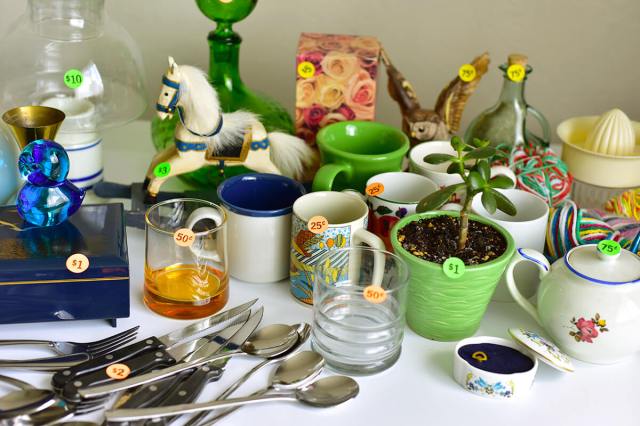
Do yourself a favor and price everything ahead of time — it will save you from answering a barrage of questions on the day of the sale. This might be a little more work up-front, especially if every item has a different price, but it’ll make it easier for you to keep track of prices and sales. Use clear signage to display prices and, if applicable, purchase price stickers to make the sale more manageable.

Credit: Ennira/ Adobe Stock

Don’t Forget Packing Materials

Designate a bin for packing materials to wrap up fragile items for customers. While this isn’t a typical expectation for a garage sale, it can make the shopping experience more enjoyable and help ensure their treasured finds stay intact on the ride home. For a budget-friendly approach, repurpose grocery and shopping bags (collect some from friends and family if you don’t have enough). You can also rely on your local no-buy group and upcycle bubble wrap, packing paper, newspaper, boxes, and bags.

Credit: shironosov/ iStock
Advertisement
Jessie Quinn
Writer
Jessie Quinn is a Los Angeles-based lifestyle journalist with words published in PEOPLE, StyleCaster, Apartment Therapy, The Spruce, Byrdie, and more. She has a Bachelor's Degree in fashion journalism from Academy of Art University and her work spans across many categories, including style, beauty, home, health, crafts, and more.
This article is for general informational purposes only.
Affiliate Disclaimer 
|
Financial Disclaimer
Featured Image Credit:  Полина Власова/ Adobe Stock | Updated  Apr 15, 2025 |
Advertisement
Organizing 3m read
0

Why You Should Be Using Baby Hangers

Closet space is hard to come by in many homes and apartments, which is why it’s important to make the most of every little bit you have.

All featured products and deals are selected independently and objectively by the author. House Outlook may receive a share of sales via affiliate links in content.

Closet space is hard to come by in many homes and apartments, which is why it’s important to make the most of every little bit you have.

Although you can use stackable baskets for closet shelves or over-the-door organizers to take advantage of unused space, one of the easiest ways to get more storage from your existing closet is to use different hangers. Not all clothes hangers are created equal — and some can be more space-efficient than others. We’re talking specifically about baby hangers, and yes, they’re perfectly fine for adults to use, too. Here’s why.

Related: Stop Clothes From Slipping Off Hangers With This Simple Trick

Using Baby Hangers Is the Ultimate Closet Hack

Don’t get us wrong — regular hangers are perfectly fine to use and certainly get the job done, but they’re not always visually appealing. Hanging pants or tank tops on a regular hanger often leaves wasted space on both ends. Not only does this make your closet look less cohesive, but the uneven weight can make clothes slide around.

Advertisement

Baby- and kid-sized hangers, on the other hand, are smaller and shorter (typically only 8 to 10 inches wide), which is beneficial in many ways. When you hang a pair of pants on a kid-sized hanger, for example, they fill up most or all of the hanger bar, providing more even weight distribution compared to standard adult hangers. With less of the hanger protruding on either end, your closet looks more streamlined, and the clothes become the focal point. Not to mention, baby hangers tend to take up less space, which is a win if your goal is to fit more clothes in your closet.

The Magic of Baby Hangers

Now that you’re privy to the magic of smaller hangers, the next step is choosing the right type. We recommend using velvet baby hangers or adding rubber bands to your existing plastic or metal ones to make them nonslip. After all, the last thing you want when organizing your closet is for clothes to fall and create a mess.

Advertisement
Pauline Lacsamana
Writer
Pauline Lacsamana is a freelance writer and editor who specializes in commerce, home, design, and lifestyle. She has bylines in The Spruce, Business Insider, U.S. News & World Report, Hunker, MyDomaine, Parade, and more.
This article is for general informational purposes only.
Affiliate Disclaimer 
|
Financial Disclaimer
Featured Image Credit:  upssallaaa/ Adobe Stock | Updated  May 2, 2025 |
Advertisement
Organizing 3m read
0

Organize Your Fridge Like This To Prevent Food Waste

Pushing the boundaries and straying from tradition is something you often see in the art world, from Picasso’s abstract paintings to Ai Weiwei’s avant-garde sculptures. But there are also those who push boundaries in the kitchen, specifically when it comes to organizing their refrigerators. KC Davis, a licensed professional therapist and TikTok creator (@domesticblisters), sorts her fridge in an untraditional manner that cuts down on food waste in a major way. Here’s how you can do it too.
All featured products and deals are selected independently and objectively by the author. House Outlook may receive a share of sales via affiliate links in content.

Pushing the boundaries and straying from tradition is something you often see in the art world, from Picasso’s abstract paintings to Ai Weiwei’s avant-garde sculptures. But there are also those who push boundaries in the kitchen, specifically when it comes to organizing their refrigerators. KC Davis, a licensed professional therapist and TikTok creator (@domesticblisters), sorts…

Eat With Your Eyes

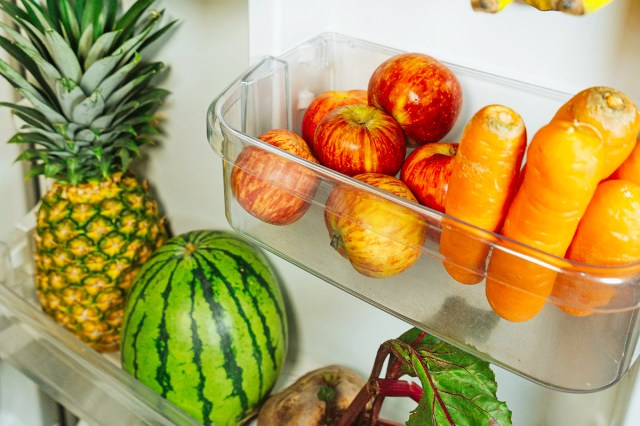
The idea behind this organizing method is keeping perishable food at eye level or in plain sight. For instance, store fresh vegetables on the door shelves instead of tucking them away in a drawer, where you risk forgetting about them. Being reminded of these foods helps you use them before they spoil, saving you money and reducing waste. Here are some other sorting tips to encourage you to use what you have on hand.

First, many people store condiments on the shelves inside the door, but all those jars and bottles take up valuable space. This is why you should relocate condiments to one of the lower drawers. Condiments typically have longer shelf lives than produce, so you don’t need to worry about them spoiling as quickly. When you need a condiment, you’ll know it’s there and go looking for it, rather than being reminded of it each time you open the refrigerator door.

Related: 5 Helpful Hacks for Maximizing Fridge Space

With all of that space freed up inside the door, this is where you should store any fruits or veggies that may soon go bad. Although this spot experiences temperature fluctuations, if your veggies always end up rotting in the crisper drawer anyway, putting them where you can actually see them might be more effective.

Advertisement

Similar to condiments, meat can also be stored in a dedicated drawer. Since it’s the main ingredient in many recipes, you’re more likely to seek it out. Plus, a drawer helps contain any leaks, making cleanup easier.

For everything else, try to avoid stacking food too deeply in the fridge, even if you have the space. If you tuck drinks and snacks behind other drinks and snacks, then you may forget about them. As a general rule, place perishables as close to eye level as possible without any visual obstructions. Adding lazy Susans allows you to store more items within easy reach at the front. Automatic drink dispensers, divided snack bins, and rolling egg holders also keep items in sight, encouraging you to use them.

Use This Hack Elsewhere

The benefits of keeping items at eye level and in plain sight extends to other rooms, too, such as the bathroom or den. For example, place skin care products front and center in your medicine cabinet so you’re reminded to use them (this is especially helpful if you often forget to apply sunscreen). Or put that book you’ve been meaning to read in a prominent spot on the bookshelf so you see it whenever you walk by.

Advertisement
Bennett Kleinman
Staff Writer
Bennett Kleinman is a New York City-based staff writer for Optimism Media, covering topics for several brands including House Outlook and Better Report. He previously contributed to television programs such as "Late Show With David Letterman" and "Impractical Jokers," and digital publications like The Onion. Bennett is also a devoted New York Yankees and New Jersey Devils fan, and thinks plain seltzer is the best drink ever invented.
This article is for general informational purposes only.
Affiliate Disclaimer 
|
Financial Disclaimer
Featured Image Credit:  Oscar Ramirez/ Unsplash+ | Updated  May 2, 2025 |
Advertisement
Organizing 3m read
0

Why Everyone in Your Home Needs Their Own Basket

It’s not always easy to keep a clean and organized home, especially when sharing space with others (and all their belongings). However, one organizing method can help you conquer clutter and encourage responsibility within your household.

All featured products and deals are selected independently and objectively by the author. House Outlook may receive a share of sales via affiliate links in content.

It’s not always easy to keep a clean and organized home, especially when sharing space with others (and all their belongings). However, one organizing method can help you conquer clutter and encourage responsibility within your household.

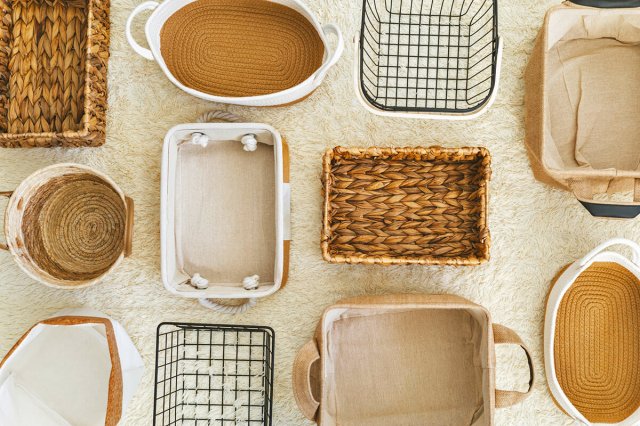
The key to this organizing method? Baskets. We know, we know, they’re not some groundbreaking tidying solution. They’re a tried-and-true way to corral toiletries in the bathroom, pantry staples in the kitchen, and throw blankets in the living room. But these aren’t the only uses for baskets around the house. TikToker and professional organizer Megan Golightly (aka @go_simplified) has a genius life hack that makes maintaining an organized home attainable — and gets your whole family involved in the effort.

Related: The Organizing Hack That Prevents Clutter Buildup

The Basket Organizing Method

To keep household clutter in check, give each family member a designated basket to collect their scattered items and return them to their proper places. (Depending on how you do things at home, you can either round up the clutter yourself or have everyone tidy their own belongings.) This organizing method not only makes cleanup easier but also fosters accountability in children, teenagers, and even messy adults by encouraging them to pick up what they leave strewn about the communal spaces.

Advertisement

Giving each person their own basket makes it clear which belongings are theirs, so they know what they are responsible for putting away. It also gives them an easy way to distribute these “go-backs” to their designated spots — be it their bedrooms or a playroom — and makes for more efficient organizing efforts.
To try this method, designate a basket for each person in the household. You can choose from baskets you already own (if you’re anything like us, you have quite the collection), source some cheap baskets from a local thrift store, or purchase matching ones, such as this set of four from Amazon (they even come with labels and a chalk marker). For upcycled baskets, you can use pantry labels to add each person’s name, or to help small children differentiate between the baskets, opt for a set with various colors or add some ribbon.

Advertisement
Jessie Quinn
Writer
Jessie Quinn is a Los Angeles-based lifestyle journalist with words published in PEOPLE, StyleCaster, Apartment Therapy, The Spruce, Byrdie, and more. She has a Bachelor's Degree in fashion journalism from Academy of Art University and her work spans across many categories, including style, beauty, home, health, crafts, and more.
This article is for general informational purposes only.

Affiliate Disclaimer 
|
Financial Disclaimer
Featured Image Credit:  Kostikova/ iStock | Updated  May 2, 2025 |
Advertisement
Cleaning 5m read
0

6 Cleaning Products Pet Parents Can’t Live Without

Sharing your home with a furry friend is one of life’s greatest joys. But with all the unconditional love comes unlimited fur, dander, waste, and paw prints. Thankfully, you can find a wide array of powerful cleaning products designed to tackle every kind of pet mess. And as a writer with over a decade of experience covering pet products, I’ve tried a lot of them. Here are my top recommendations for building the ultimate pet-friendly cleaning tool kit.

All featured products and deals are selected independently and objectively by the author. House Outlook may receive a share of sales via affiliate links in content.

Sharing your home with a furry friend is one of life’s greatest joys. But with all the unconditional love comes unlimited fur, dander, waste, and paw prints. Thankfully, you can find a wide array of powerful cleaning products designed to tackle every kind of pet mess. And as a writer with over a decade of…

The Best Pet-Safe Floor Cleaner

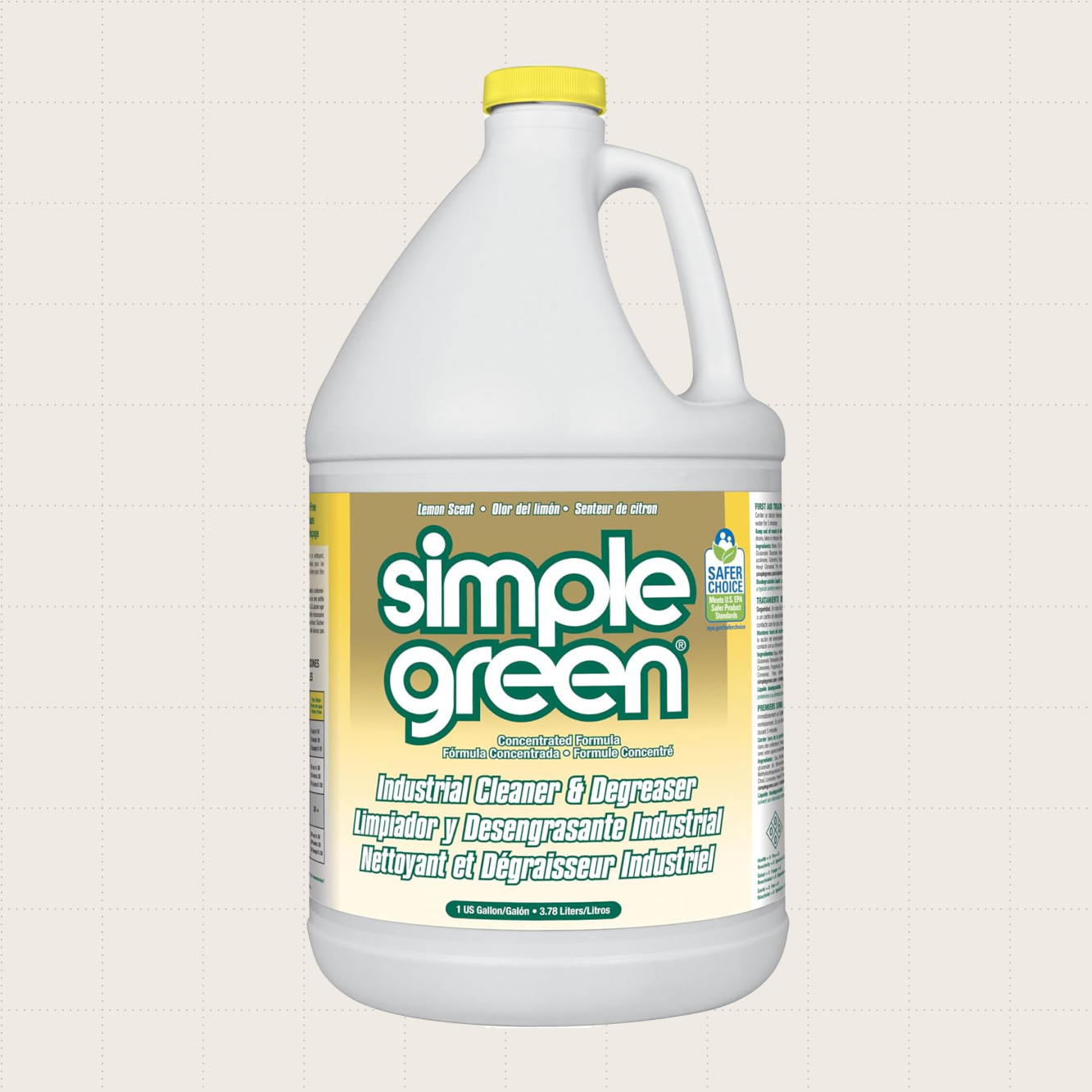
When shopping for a floor cleaner, a pet-safe formula is a must. This industrial cleaner from Simple Green keeps things, well, simple. It’s nontoxic, nonabrasive, solvent-free, and biodegradable. With a limited ingredients list, this cleaner and degreaser is safe for various surfaces, including hard, nonporous flooring materials such as vinyl, laminate, ceramic tiles, and luxury vinyl plank flooring, as well as carpet and upholstery. It safely removes stains and odors, leaving behind a nice, but not overpowering, lemon scent.

A 1-gallon jug of Simple Green Industrial Cleaner and Degreaser against a beige background.
Simple Green Industrial Cleaner and Degreaser
Price: $10.98
BUY NOW

The Best Vacuum for Pet Hair

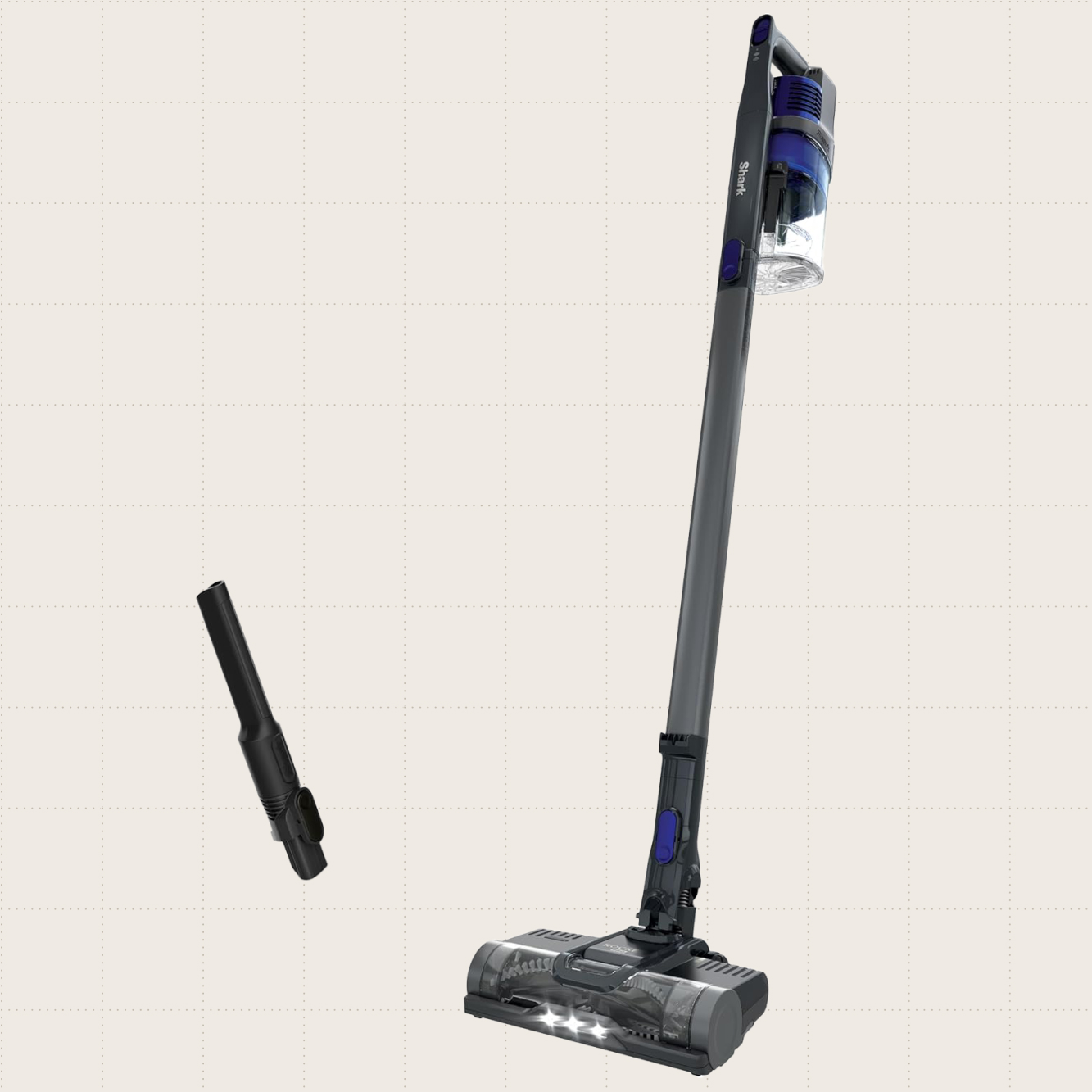
To remove pesky pet hair from upholstered furniture, rugs, the corners of rooms, and even your window treatments, you need a reliable vacuum cleaner. So what makes a good vacuum for removing pet hair? One with strong suction, user-friendly attachments, and easy portability. We love the Shark Pet Cordless Stick Vacuum because it checks all those boxes while being lightweight and easy to maneuver, equipped with a HEPA filter, and offering 40 minutes of battery life to help you clean a large area of the home. It also functions as a handheld vacuum, perfect for cleaning hard-to-reach spots like in between couch cushions, around litter boxes, and near food and bowls.

The Shark Pet Cordless Stick Vacuum and the crevice tool attachment against a beige background.
Shark Pet Cordless Stick Vacuum
Price: $179.00
BUY NOW
Advertisement

The Best Spot Cleaner

Carpets, rugs, bedding, and upholstered furniture are all at risk of becoming stained in a household with pets, especially if you have a puppy or kitten with a tiny bladder or an older companion with incontinence issues. Even if you have a healthy adult in the prime of their life, keeping a spot cleaner on hand is a good idea because accidents just happen from time to time.

Related: This Unexpected Tool Is a Pet Hair Magnet

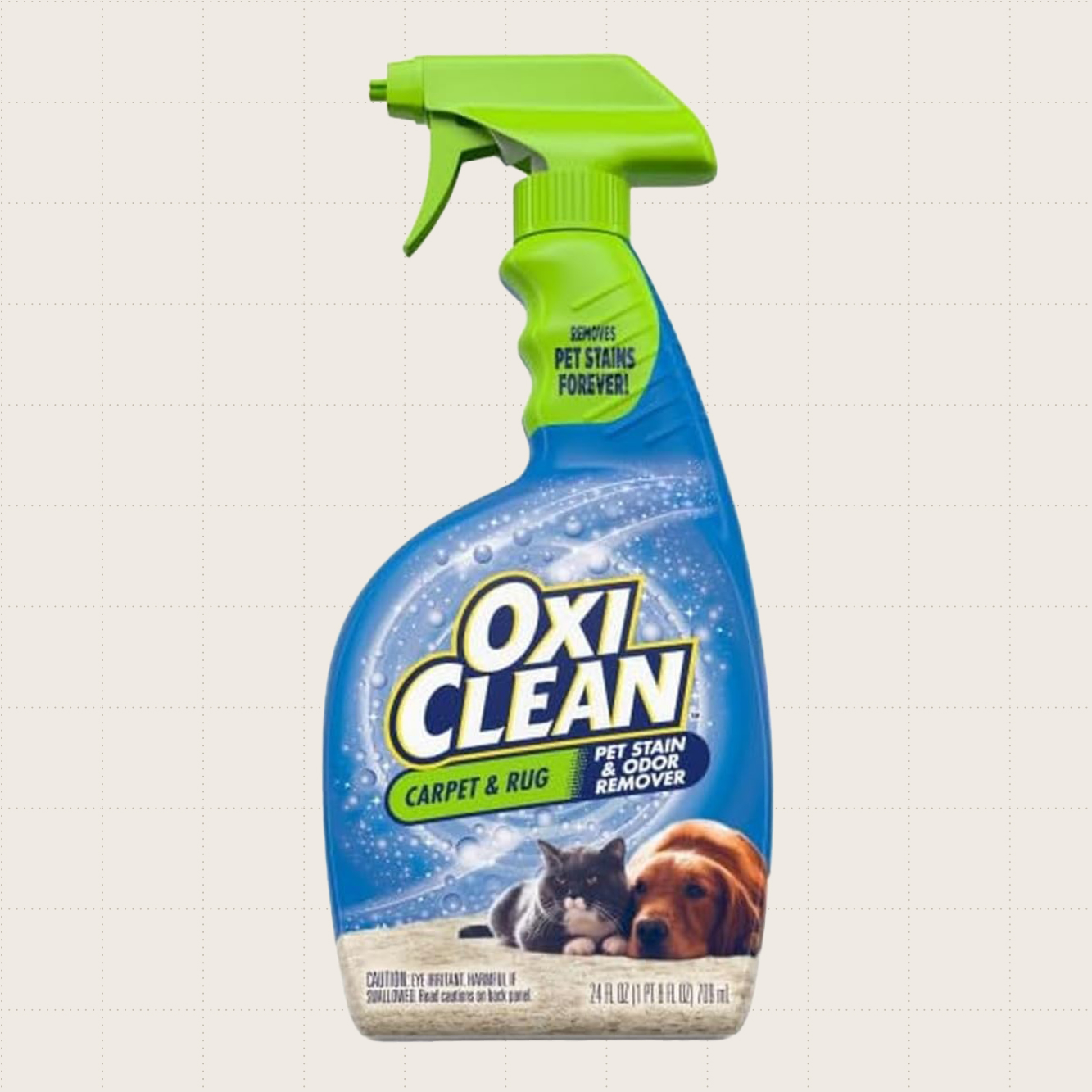
For occasional messes, a fast-acting spray formula, such as OxiClean Carpet Pet Stain Remover, will come in handy. Use it to remove tough stains, including urine, feces, and vomit, and eliminate odors to discourage your pet from marking the same spot. For more frequent soiling, it might be worth investing in a machine such as the Bissell Little Green Pet Deluxe Portable Carpet Cleaner, which can make tackling stubborn stains less frustrating.

A 24-ounce spray bottle of OxiClean Carpet Pet Stain Remover against a beige background.
OxiClean Carpet Pet Stain Remover
Price: $4.98
BUY NOW

The Best Stain Remover for Odors

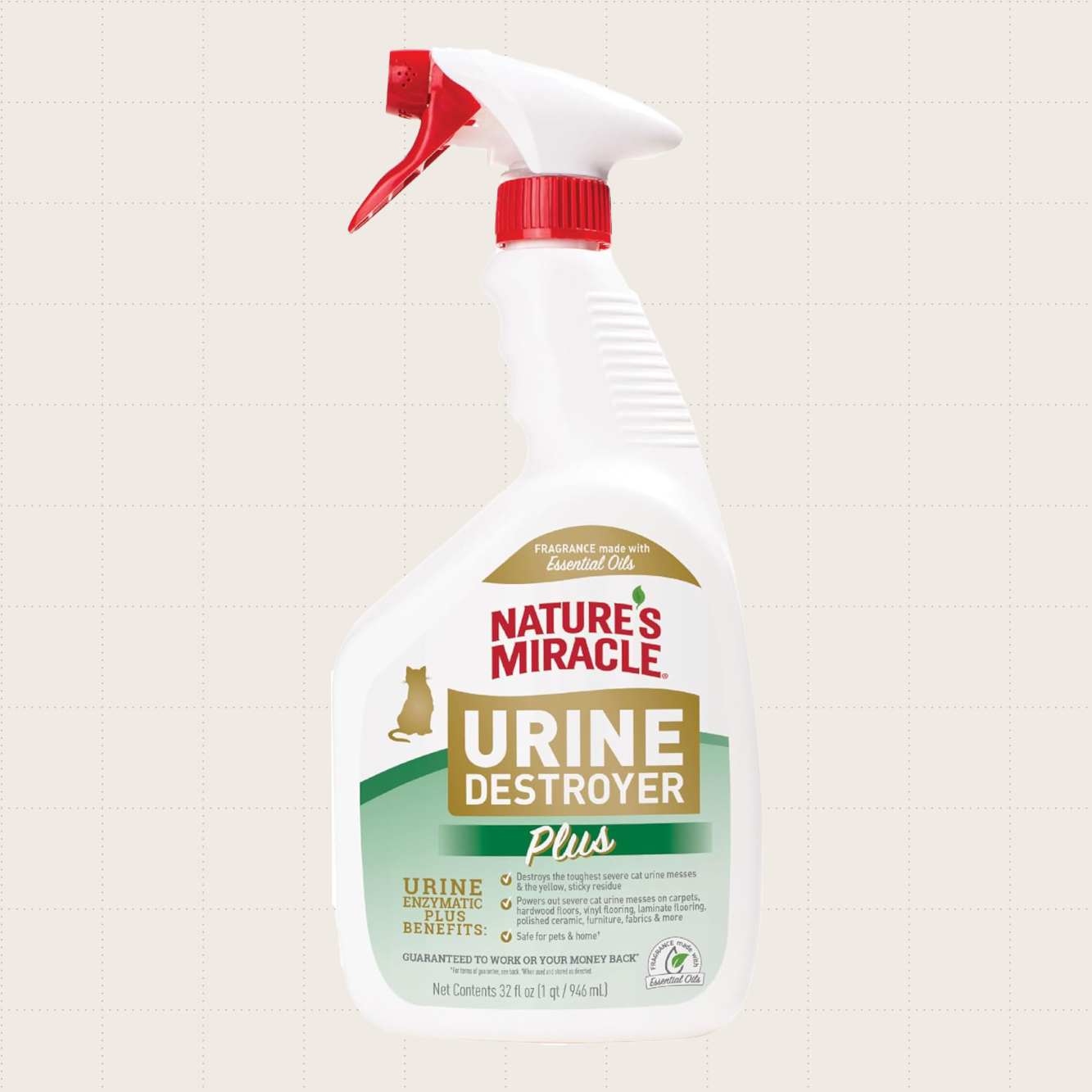
A stain remover that also eliminates odors is a must, and in our opinion, no one does it better than Nature’s Miracle. We recommend Nature’s Miracle Urine Destroyer Plus, which is intended for cats, but can be used for any pet-related accident in the home or car. (Honestly, if it can get rid of cat pee smell, it can handle almost any odor, so we use it for all sorts of messes.) The heavy-duty formula contains enzymes that activate when they come into contact with organic matter such as pet urine. These enzymes keep working as long as there’s a food source for them to break down, helping to neutralize odor-causing ammonia found in pet urine. Rather than mask the smell with perfumes, this cleaner eliminates it at the source.

A 32-ounce spray bottle of Nature's Miracle Urine Destroyer Plus against a beige background.
Nature’s Miracle Urine Destroyer Plus
Price: $12.70
BUY NOW
Advertisement

The Best Pet Wipes for Dogs and Cats

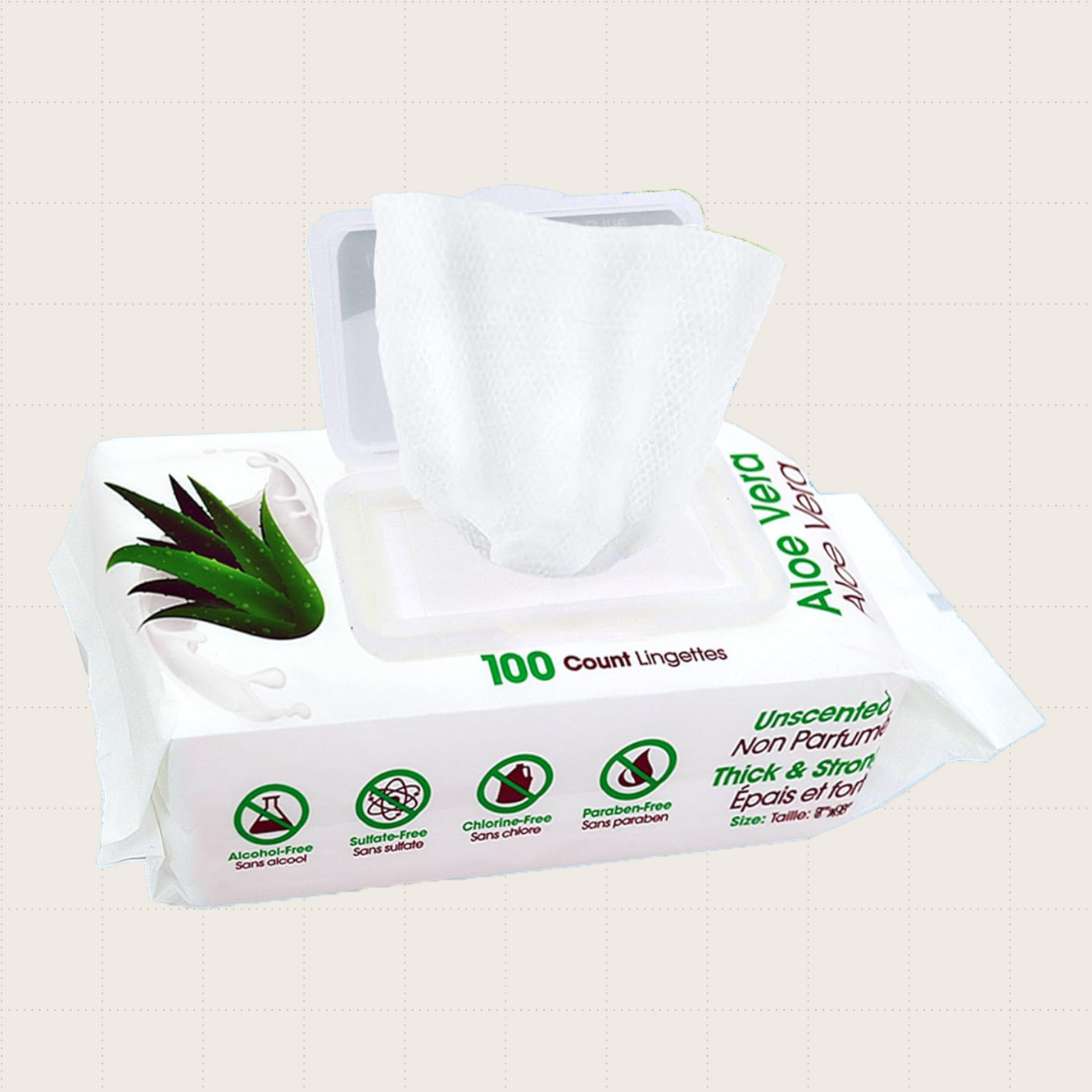
You may be able to simplify your home and car cleaning routine by keeping your pet’s fur and paws tidy. Wiping your pet’s feet, fur, rear, and the area around their mouths can go a long way in reducing dirt, debris, drool, and other pet-related messes. The thick, durable pet wipes from Best Pet Supplies come in eight scents, including unscented. They’re formulated with vitamin E, aloe vera, and cucumber extract, making them nourishing for coats between washes and safe on paws and other sensitive areas.

A resealable pack of 100 pet wipes from Best Pet Supplies. Pictured is the Hydrating Aloe Vera option.
Best Pet Supplies Pet Wipes
Price: $7.99
BUY NOW

The Best Air Purifier

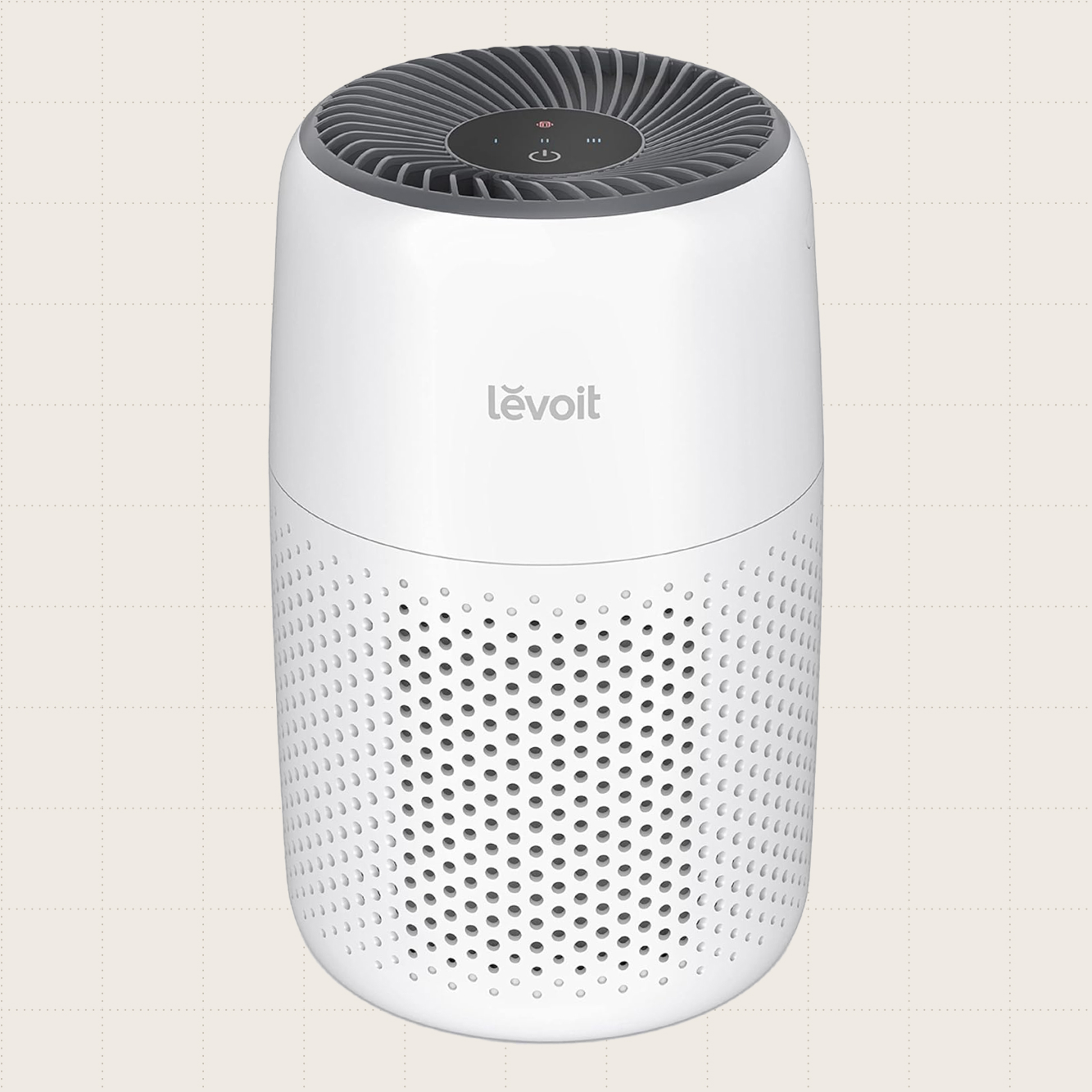
Fur, dander, and dirt just come with the territory when you share your home with a pet. Regularly using an air purifier goes a long way in maintaining healthy air quality — and it’s as easy as pushing a button. Air purifiers may also alleviate allergy symptoms, such as sniffling and red eyes, that are often triggered by pet dander. This desktop purifier from LEVOIT features two activated carbon filters to trap pet hair, dander, and other fine airborne pollutants. It effectively neutralizes odors, making it a worthwhile addition to your cat’s litter box space or your dog’s favorite napping spot. The unit weighs less than 2.5 pounds, so it’s easy to move from room to room if you’re looking to start with something small but mighty.

LEVOIT Core Mini Air Purifier, which is small enough to fit on a desk or countertop, shown against a beige background.
LEVOIT Core Mini Air Purifier
Price: $49.99
BUY NOW
Advertisement
Krissy Howard
Writer
Krissy Howard is a New Mexico-based writer. Her work has appeared in Byrdie, Hunker, and Simplemost, and she is the former managing editor of music satire website, The Hard Times.
This article is for general informational purposes only.
Affiliate Disclaimer 
|
Financial Disclaimer
Featured Image Credit:  Ilia / Unsplash | Updated  Apr 15, 2025 |