Advertisement
Food & Drink 3m read
0

3 Proven Hacks for Cutting Onions Without Crying

There are two universal truths about onions: They add depth of flavor to a variety of dishes, and they make you cry when you cut them. Both have the same root cause — volatile sulfur compounds. These organic molecules provide the pungent flavor we love, and also the tears we could do without.

All featured products and deals are selected independently and objectively by the author. House Outlook may receive a share of sales via affiliate links in content.

There are two universal truths about onions: They add depth of flavor to a variety of dishes, and they make you cry when you cut them. Both have the same root cause — volatile sulfur compounds. These organic molecules provide the pungent flavor we love, and also the tears we could do without.

Chemists have identified the chemical compound in question, a lachrymatory factor called syn-propanethial-S-oxide. That’s Ph.D.-speak for “a substance that makes you cry.” If you’d rather avoid the runny mascara and nose-blowing, however, here are three proven ways to cut onions without shedding any tears.

Use a Really Sharp Knife

Onions aren’t a tear gas bomb when they’re intact. It’s only when they’re chopped that an enzyme, normally trapped inside the cell walls, interacts with one of those sulfur compounds to make the infamous lachrymatory factor. The more cells are crushed or damaged, the more this enzyme is released, and the more you’ll cry.

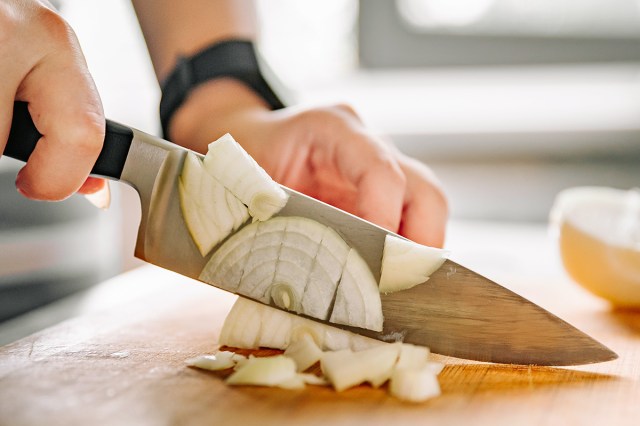
So, how do you cut an onion with minimal cellular damage? Use a really sharp knife. A sharp blade shears the cell walls neatly, with minimal damage. A dull one crushes them. That makes a significant difference.

Advertisement

Chill the Onion Before You Cut It

This trick makes the rounds on social media on a regular basis. And unlike many other common onion-cutting hacks, this one actually works. Low temperatures reduce enzyme activity and sulfur volatility, but chilling your onions enough to make a difference takes about 30 minutes in the freezer. Alternatively, store a few onions in your fridge so they’re thoroughly chilled whenever you need to cut them. If the onion isn’t cold all the way through, the hack won’t work.

Cut Onions in Front of a Fan

This onion-cutting hack is also effective, though finding space can be problematic in small kitchens. The onion chemicals won’t irritate your eyes if they never reach them, so put a small fan beside your cutting board. (We like the Fanion, which is adorably onion-shaped and compact enough to sit on your cutting board, but any desk fan will do.)

Related: A Simple Trick for Getting the Garlic Smell Off Your Hands

As you cut the onion, it releases its chemicals in the form of tiny droplets. The fan simply blows them away from you, rather than letting them rise naturally. If you have a powerful vent hood, slicing onions next to the stove with the vent hood running can also help. It’s not as effective as a fan blowing directly across your cutting board, though.

Bonus Hack: Wear Eye Protection

Physically blocking the “onion juice” from your eyes is the ultimate answer. Jobsite-style protective eyewear helps, but swimming or laboratory goggles are better. You may feel foolish, but at least you won’t cry.

Advertisement
Fred Decker
Writer
Fred Decker is a trained chef and former restaurateur. Since closing his restaurants over a decade ago he has been a prolific freelance writer, publishing several thousand articles on dozens of high-volume websites including Taste Of Home, Hunker, Tasting Table, Week&, eHow, and GOBankingRates. He lives on a rural acreage shared with a big garden, chickens, rabbits, and grandkids.
This article is for general informational purposes only.
Affiliate Disclaimer 
|
Financial Disclaimer
Featured Image Credit:  Credit: siamionau pavel/ Shutterstock | Updated  Oct 24, 2024 |
Advertisement
Cleaning 4m read
0

The One Thing You Should Do To Make Your Refrigerator Run More Efficiently

Was your last electricity bill much higher than usual? Does your beer not feel as cold as it once did? Are you kept awake at night by the sound of your fridge sputtering and rattling? If you relate to any of these scenarios, it could be a sign that your refrigerator isn’t running as efficiently as it should be. Like any other home appliance, fridges occasionally require maintenance, but scheduling an appointment with a professional is often expensive and inconvenient. So before you do that, here’s one thing you can — and should — do to make a refrigerator run more efficiently.

All featured products and deals are selected independently and objectively by the author. House Outlook may receive a share of sales via affiliate links in content.

Was your last electricity bill much higher than usual? Does your beer not feel as cold as it once did? Are you kept awake at night by the sound of your fridge sputtering and rattling? If you relate to any of these scenarios, it could be a sign that your refrigerator isn’t running as efficiently…

Clean the Condenser Coils

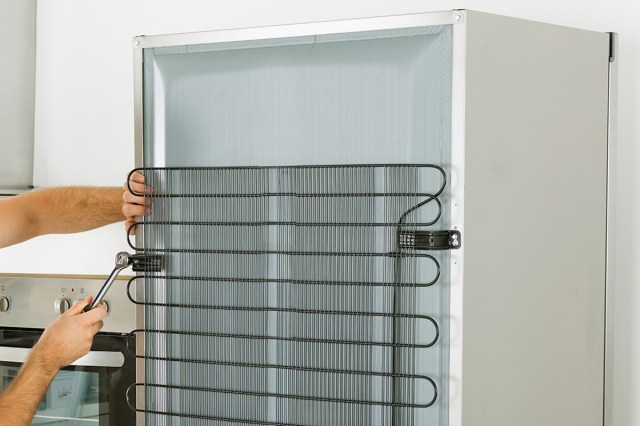
Condenser coils are an integral component of any refrigerator, as they help keep the entire appliance cool by releasing any absorbed heat. The coils are usually located underneath or on the back of the fridge and may be hidden behind a panel. (A quick Google search including your refrigerator’s make and model should help you locate them.) Over time, the coils become clogged with dust, pet hair, and other household dirt, forcing the fridge to work harder for lesser results. This leads to higher energy bills, a shorter lifespan for the machine, and a failure to cool your food properly. But keeping the coils clean can improve a refrigerator’s energy efficiency by up to 30%, saving you cash on your monthly bills and extending the life of the appliance.

How To Clean the Coils

Cleaning condenser coils is a relatively simple process but requires a little bit of care to avoid serious injury. Here’s how you should go about it:

Step 1: Unplug the refrigerator before doing anything else. Leaving the fridge plugged in may result in electrical damage or even an unexpected shock or two.

A Note on Food Safety

If you’re going to leave the refrigerator unplugged for more than four hours (perhaps you’re using this opportunity to defrost your freezer), transfer all of your perishables to another fridge or cooler first. This should keep the food at a safe temperature until the out-of-commission fridge is running again. Be sure to remove any glass jars before moving the fridge. If you don’t, they could tip over and shatter inside, creating an even bigger mess than the dusty condenser coils.

Advertisement

Step 2: Carefully move the refrigerator out far enough so you can easily reach behind it. If it’s too heavy, don’t try to be a hero; ask a friend or family member for assistance.

Step 3: Find the coils, and, if necessary, carefully remove the panel if one is obstructing them. Set that panel aside until the job is complete. Note: If you have the misfortune of owning a refrigerator with condenser coils on the bottom, this YouTube video shows you how to clean them using compressed air, a box fan, and a filter.

Related: 5 Essential Tips for Cleaning Smarter, Not Harder

Step 4: Take an elongated, flexible cleaning brush — we recommend this one from Amazon — and run it over the coils to remove any dust or hair. Be gentle, as you’ll want to avoid bending or damaging the coils. While your vacuum cleaner’s soft brush attachment can be used in this situation, we find the condenser coil brush to be more effective. That said, cleaning coils tends to result in a plethora of dust bunnies, so take a few minutes to vacuum or sweep the area afterward.

Step 5: Replace the panel if need be, and carefully return the fridge to its original spot. Then plug it back in and the appliance should work like new.

Advertisement
Bennett Kleinman
Staff Writer
Bennett Kleinman is a New York City-based staff writer for Optimism Media, covering topics for several brands including House Outlook and Better Report. He previously contributed to television programs such as "Late Show With David Letterman" and "Impractical Jokers," and digital publications like The Onion. Bennett is also a devoted New York Yankees and New Jersey Devils fan, and thinks plain seltzer is the best drink ever invented.
This article is for general informational purposes only.
Affiliate Disclaimer 
|
Financial Disclaimer
Featured Image Credit:  Andrey_Popov/ Shutterstock | Updated  Oct 22, 2024 |
Advertisement
Home Improvement 3m read
0

5 Unexpected Ways To Use Cooking Spray Around the House

Don’t let the name fool you — cooking spray isn’t just for greasing up frying pans to prevent eggs from sticking. This pantry staple has a wide range of uses, both in and out of the kitchen, all of which can make everyday tasks a whole lot easier. So, grab a can of nonstick cooking spray — whether it’s vegetable, canola, olive, or avocado oil-based — and get ready to use it in these five unexpected ways.

All featured products and deals are selected independently and objectively by the author. House Outlook may receive a share of sales via affiliate links in content.

Don’t let the name fool you — cooking spray isn’t just for greasing up frying pans to prevent eggs from sticking. This pantry staple has a wide range of uses, both in and out of the kitchen, all of which can make everyday tasks a whole lot easier. So, grab a can of nonstick cooking…

Prevent Stains From Forming

Saucy pastas and greasy stews often leave behind unsightly stains on plastic food storage containers. To prevent discoloration from happening in the first place, coat the inside of the storage container with a light layer of nonstick cooking spray, and then add your food. Once the leftovers have been finished and it’s time to wash the dishes, you’ll see that your plastic container looks as clear as the day you bought it.

Remove Shower and Soap Scum

Soap scum is a mixture of soap and hard water that leaves a white, powdery residue on shower doors, tile, and faucets. Cleaning it usually requires a scrubbing brush and considerable elbow grease, but the natural oils in cooking spray can help break down those pesky lime deposits, making them easeri to remove. Just spray the soap scum with some cooking oil and let it sit for five to 10 minutes. Rinse the surface with water and dry it with a clean rag for a scum-free finish.

Advertisement

Shine Your Faucets

Once you’re done getting rid of all that bathroom grime, it’s time to restore some shine to your dingy-looking fixtures. Spray the sink faucet, shower head, bathtub spout, or any other metallic surface with cooking spray. Then, using a clean rag, spread the oils around in a circular motion to buff out any smudges. Before too long, your metal bathroom fixtures will be absolutely glistening.

Quiet Squeaky Door Hinges

Much like WD-40, cooking spray can be used to quiet creaky door or cabinet hinges. Spray a bit of cooking oil onto the hinge itself — just be careful to avoid getting any on the door, as the oils could damage the wood or paint. This should lube up the hinge enough to get rid of those deafening creaks.

Related: Remove Water Stains From Wood Furniture With This One Ingredient

Spray Your Measuring Cups

If you’re making a recipe that requires measuring out honey, maple syrup, or any other sticky ingredient, cooking spray is your new best friend. Coat the measuring cup with a fine layer of cooking oil before adding in your peanut butter, molasses, or corn syrup. When it’s time to pour that goop into a bowl, the contents should slide out easily thanks to the cooking spray, leaving behind little to no sticky residue.

Advertisement
Bennett Kleinman
Staff Writer
Bennett Kleinman is a New York City-based staff writer for Optimism Media, covering topics for several brands including House Outlook and Better Report. He previously contributed to television programs such as "Late Show With David Letterman" and "Impractical Jokers," and digital publications like The Onion. Bennett is also a devoted New York Yankees and New Jersey Devils fan, and thinks plain seltzer is the best drink ever invented.
This article is for general informational purposes only.
Affiliate Disclaimer 
|
Financial Disclaimer
Featured Image Credit:  Credit: NDanko/ Shutterstock | Updated  Oct 22, 2024 |
Advertisement
Gardening 3m read
0

This Trick Makes Bagging Fallen Leaves So Much Easier

When you’re done making leaf angels and it’s time to bag up the fallen leaves, you might find yourself in a bit of a pickle: How do you keep the garbage bag upright and open if your hands are already preoccupied gathering armfuls of leaves? It’s not always possible to enlist the help of a friendly neighbor, and using your feet to keep the bag open while raking isn’t that easy either. Thankfully, there’s a trick to make bagging fallen leaves much simpler, and it calls for a standard cardboard box — something you likely have in your recycling bin.

All featured products and deals are selected independently and objectively by the author. House Outlook may receive a share of sales via affiliate links in content.

When you’re done making leaf angels and it’s time to bag up the fallen leaves, you might find yourself in a bit of a pickle: How do you keep the garbage bag upright and open if your hands are already preoccupied gathering armfuls of leaves? It’s not always possible to enlist the help of a…

What You’ll Need

Trash bags designed for lawn and leaf care

Large, flattened cardboard box

Garden rake or broom

Leaf scoops (not necessary, but nice to have)

Bagging Leaves, Made Easy

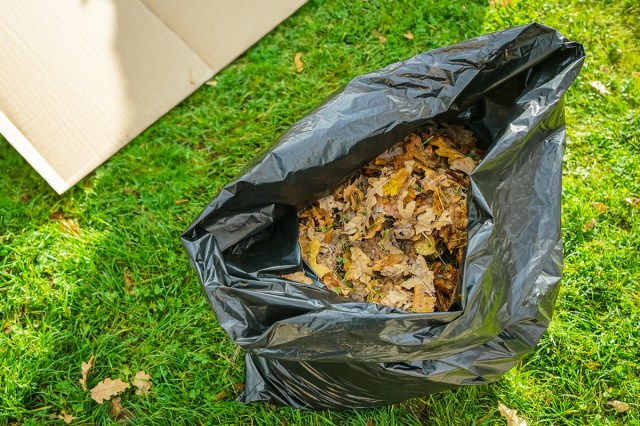
Begin by taking a large, flattened cardboard box and folding it into a U-shape, creating one flat panel on the bottom and two side panels that are angled up. This type of fold is referred to as a gatefold, and is often used for brochures and menus. Open a garbage bag and partially insert the gatefolded cardboard into the bag, placing the entire thing on the ground. This creates an open-topped funnel that keeps the garbage bag wide open while you’re raking.

Related: 7 Vegetables To Plant This Fall for Early Spring Produce

At this point you can proceed in one of two ways: Either leave the box and bag lying flat on the ground, using a rake or broom to direct the leaves, or tilt the box upward toward the sky, gather leaves by the handful, and drop them in from above. Once done, remove the box, compress the leaves using the rake or your hands, and tie the bag shut.

Advertisement

What’s Next?

Now that you have a clean lawn and bags full of leaves, what should you do with them? If your community provides curbside pickup, that’s one way to go. But you can also use those leaves to create nutrient-rich compost to stimulate garden growth come spring. Just keep in mind that you should use leaves from maple, birch, ash, and cherry trees, as oak leaves are too acidic.

Take a bag of leaves to a corner of your yard and pour them into a pile. (We know you just raked them up, but trust the process.) Then use a lawn mower or leaf shredder to shred the leaves, before adding in any grass clippings or vegetable scraps. Once or twice a week, use a shovel to turn the compost, which introduces oxygen and allows the microorganisms to breathe. If you start this process in the autumn, you’ll have a healthy compost pile by springtime that you can use to promote plant growth in your garden.

Advertisement

Bennett Kleinman
Staff Writer
Bennett Kleinman is a New York City-based staff writer for Optimism Media, covering topics for several brands including House Outlook and Better Report. He previously contributed to television programs such as "Late Show With David Letterman" and "Impractical Jokers," and digital publications like The Onion. Bennett is also a devoted New York Yankees and New Jersey Devils fan, and thinks plain seltzer is the best drink ever invented.
This article is for general informational purposes only.
Affiliate Disclaimer 
|
Financial Disclaimer
Featured Image Credit:  maradon 333/ Shutterstock | Updated  Oct 22, 2024 |
Advertisement
Cleaning 3m read
0

This Paper Towel Hack Can Save You Money and Reduce Waste

Like most items on our grocery bills, the price of paper towels continues to rise. You can cut costs by buying them in bulk, but even then we’re talking upwards of $40 for a 12-pack. At the rate most people go through paper towels, it can really add up.

All featured products and deals are selected independently and objectively by the author. House Outlook may receive a share of sales via affiliate links in content.

Like most items on our grocery bills, the price of paper towels continues to rise. You can cut costs by buying them in bulk, but even then we’re talking upwards of $40 for a 12-pack. At the rate most people go through paper towels, it can really add up.

Rags and reusable “paper” towels are a more environmentally friendly alternative, but regular paper towels still come in handy for certain things. When there’s a big spill, using full-size paper towels — likely more than one or two — can mop it up quickly. But when there’s a small spill or you want to use a paper towel as a napkin, even tearable paper towels can feel too big and wasteful.

If you’re a paper towel household and constantly find yourself either ripping paper towels in half to waste less or using a whole one when all you really need is a small portion, this money-saving paper towel hack is for you.

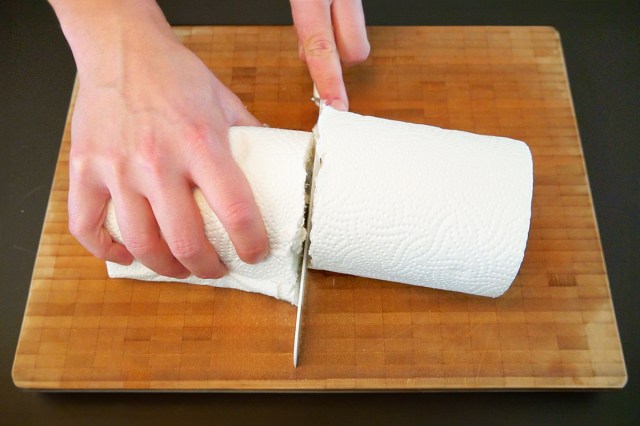
The hack, originally introduced by Instagrammer and hack expert LORAfied, consists of using a sharp knife to cut a roll of paper towels in half. With less surface area, the goal is to waste fewer paper towels. It’s a simple solution that can help your paper towels go twice as far.

Advertisement

Here’s How It’s Done

Grab a long, sharp knife and place a roll of paper towels horizontally on a cutting board. Carefully cut the roll in half down the middle. The halves might fray and shred a bit, so if that happens, you might want to try a different knife. But even with a little fraying, the hack will still be successful.

Related: 5 Unexpected Ways To Clean With Denture Tablets

Once the paper towel roll is cut in half, place the two halves on your paper towel holder. If you have an upright, freestanding paper towel holder, stack the two halves on top of each other. A horizontal paper towel holder will work the same way, but the halves will sit next to each other.

Then, the next time you need a napkin or want to wipe up a small spill, grab a half-size paper towel. You’ll save money and waste less — a win-win.

Advertisement
Jill Layton
Writer
Jill Layton started writing professionally when she realized her emails and texts were kinda funny. She’s an affiliate shopping writer and lifestyle contributor for Scary Mommy, Bustle, Mic, and Best Products. She’s the mom of two alarmingly witty kids and the world’s most perfect dog.
This article is for general informational purposes only.
Affiliate Disclaimer 
|
Financial Disclaimer
Featured Image Credit:  Shutterstock | Updated  Jan 9, 2025 |
Advertisement
Food & Drink 3m read
0

An Easy Trick To Revive Carrots That Have Gone Limp

When you buy a bag of whole carrots, it’s fair to assume that a few of them will end up going limp after a couple of weeks. Unless you’re a diligent meal planner, it can be difficult to use up an entire pound of carrots in a short amount of time. But just because a carrot has turned bendy and soft doesn’t mean it can’t be revived.

When you buy a bag of whole carrots, it’s fair to assume that a few of them will end up going limp after a couple of weeks. Unless you’re a diligent meal planner, it can be difficult to use up an entire pound of carrots in a short amount of time. But just because a carrot…

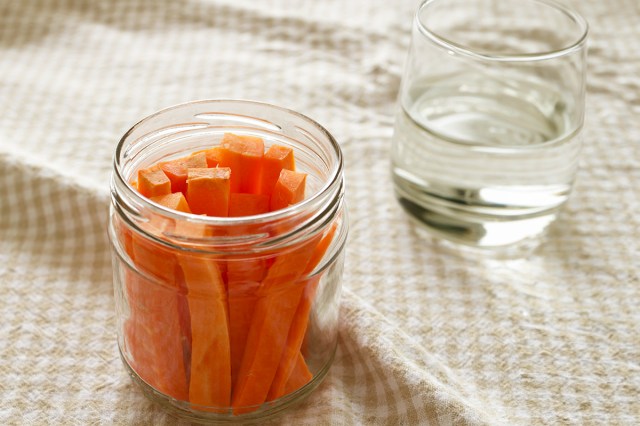
A game-changing hack can turn floppy carrots into crunchy, delicious root vegetables once again. The trick is to chop the carrots into matchsticks (also called a julienne cut) and place them in an airtight jar of cold water. (Something like a Mason jar or a canister with a clamp lid would work great.) Make sure the carrots are completely submerged and refrigerate them overnight.

If you’re short on time, adding ice to the water can help speed up the process — even just five minutes in an icy bath can make a big difference. The carrots will regain their crunch and stay that way for weeks when stored this way.

Advertisement

The Science Behind Reviving Wilted Vegetables

Carrots are root vegetables that contain 85% to 95% water, according to Healthline. When a carrot is immersed in fresh water, it absorbs the water through osmosis. Remember osmosis from your elementary school science class? It’s the process of water moving into an organism, like a carrot, because the carrot is saltier than the surrounding water. This causes the carrot to stiffen. If you have kids or grandkids, this could be a fun science experiment for them to participate in.

Related: How To Slice Grapes and Cherry Tomatoes in Seconds Flat

Unfortunately, you won’t be able to rehydrate moldy carrots or ones that have gone bad, but fresh-looking bendy carrots are fair game. The same hack can be applied to many other vegetables, including lettuce, celery, broccoli, beets, asparagus, potatoes, and herbs.

So, the next time you find a rogue limp carrot in the bottom of your crisper drawer, try this hack and get yourself some hummus or ranch for a nutritious and crunchy snack.

Advertisement
Jill Layton
Writer
Jill Layton started writing professionally when she realized her emails and texts were kinda funny. She’s an affiliate shopping writer and lifestyle contributor for Scary Mommy, Bustle, Mic, and Best Products. She’s the mom of two alarmingly witty kids and the world’s most perfect dog.
This article is for general informational purposes only.
Affiliate Disclaimer 
|
Financial Disclaimer
Featured Image Credit:  jreika/ Shutterstock | Updated  Apr 9, 2025 |
Advertisement
Organizing 2m read
0

This Hack for Labeling Moving Boxes Is a Total Game Changer

Moving an entire household is stressful, to say the least. But properly labeled boxes can help you avoid moving-day chaos and make it easier for you, your professional movers, or your extremely generous friends to identify where to put your things in your new place.

All featured products and deals are selected independently and objectively by the author. House Outlook may receive a share of sales via affiliate links in content.

Moving an entire household is stressful, to say the least. But properly labeled boxes can help you avoid moving-day chaos and make it easier for you, your professional movers, or your extremely generous friends to identify where to put your things in your new place.

Since boxes look practically identical once they’re on the moving truck, they have to be labeled. Otherwise, you’ll end up with bathroom stuff in your kitchen (and vice versa), and waste time re-relocating your belongings from room to room. To save yourself the trouble of writing on each and every box, though, and to quickly and efficiently designate which box goes where, consider this handy moving box labeling hack.

The key is to develop a color-coding system. To get it done, you’ll need several rolls of masking tape in different colors — specifically, a different color for each room. You’ll also need a flattened cardboard box or a large piece of paper.

Advertisement
Color-Coding Steps

1. Assign each room at your new residence a different color of masking tape. Place a strip of the assigned tape on the wall just outside the room (or inside if that makes more sense for an open-concept space like a living room or kitchen).

2. Create a cheat sheet to keep track of all the colors/rooms and place it in a central location or outside the main entrance. This can be done on a flattened moving box.

3. As you pack up the goods for a particular room, place strips of the corresponding tape on the top and all four sides of the box so it’s immediately clear where it belongs.

4. If your new home has more than one level, you can put multiple tape colors at each end of the staircase to signal which rooms are located upstairs or downstairs.

This time-saving hack will make unpacking a whole lot easier — and your movers are guaranteed to be impressed.

Advertisement
Jill Layton
Writer
Jill Layton started writing professionally when she realized her emails and texts were kinda funny. She’s an affiliate shopping writer and lifestyle contributor for Scary Mommy, Bustle, Mic, and Best Products. She’s the mom of two alarmingly witty kids and the world’s most perfect dog.
This article is for general informational purposes only.
Affiliate Disclaimer 
|
Financial Disclaimer
Featured Image Credit:  Studio CJ/ iStock | Updated  Oct 18, 2024 |
Advertisement
Food & Drink 3m read
0

This Chef-Approved Trick Keeps Herbs Fresher for Longer

Fresh herbs can completely transform the flavor of a dish. A few basil leaves or a sprig of thyme can elevate a microwave meal into a five-star feast. But as delicious as fresh herbs may be, they can wilt and go bad in the blink of an eye. That being said, there are ways to keep herbs fresher for longer. Here’s one such chef-approved trick to extend the life of your herbs.

Fresh herbs can completely transform the flavor of a dish. A few basil leaves or a sprig of thyme can elevate a microwave meal into a five-star feast. But as delicious as fresh herbs may be, they can wilt and go bad in the blink of an eye. That being said, there are ways to…

Use a Damp Paper Towel for Hardy Herbs

Hardy herbs such as oregano, rosemary, and thyme can survive for two to three weeks with this trick. Run a paper towel under water until damp, then wrap it around the entire herb. Place it inside an airtight vessel, such as a Ziploc bag or food storage container. This is an important step to follow as it prevents oxygen from coming into contact with the herbs, which causes them to brown. Put the container inside the fridge, and be sure to check the paper towel from time to time. If it begins to dry out, replace the towel with a newly dampened one.

Related: A Simple Trick for Getting the Garlic Smell Off Your Hands

Use the Bouquet Method for Soft Herbs

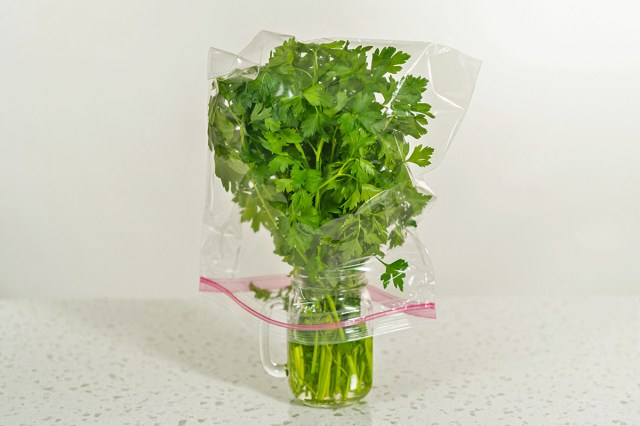
While the aforementioned method is ideal for extending the life of hardy herbs, the rules are different for soft herbs such as cilantro, mint, and parsley. First, wash and dry the herbs, patting them down with a paper towel to remove excess moisture. Next, trim the bottom half inch of each stem and place the herbs in a tall glass with about an inch of water, like they’re a bouquet of flowers. Finally, cover the entire “bouquet” of herbs with a plastic bag (a produce bag from the grocery store will do), and then put it inside the refrigerator. This should keep those soft herbs fresh for several weeks longer.

Advertisement

Basil Lovers Take Note

While most herbs — both hardy and soft — can and should be stored in the refrigerator, there’s one major exception: basil. Basil is an herb that many chefs rely on, but refrigerating it will cause the leaves to wilt and turn brown extremely quickly. Here’s what you should do instead: Prepare the basil using the bouquet method above. Then, instead of putting the basil in the fridge, just leave it on the countertop at room temperature, preferably in an area without direct sunlight. This is the best way to prolong the life of your basil, allowing you to garnish pizza margherita and pad thai to your heart’s content.

Advertisement
Bennett Kleinman
Staff Writer
Bennett Kleinman is a New York City-based staff writer for Optimism Media, covering topics for several brands including House Outlook and Better Report. He previously contributed to television programs such as "Late Show With David Letterman" and "Impractical Jokers," and digital publications like The Onion. Bennett is also a devoted New York Yankees and New Jersey Devils fan, and thinks plain seltzer is the best drink ever invented.
This article is for general informational purposes only.
Affiliate Disclaimer 
|
Financial Disclaimer
Featured Image Credit:  Arina P Habich/ Shutterstock | Updated  Oct 8, 2024 |
Advertisement
Home Improvement 3m read
0

Defrost Your Windshield in Seconds With This Life-Changing Hack

It’s the dead of winter and you’re already running late for an appointment. Suddenly, another hurdle presents itself: Your car’s windshield is covered in ice. Anyone who lives in a place with freezing weather knows just how annoying it is to deal with icy windshields. Cranking up the heat and letting it run is one option, but that takes valuable time you may not have. Don’t worry, though — there’s a quick and easy hack to defrost your windshield in seconds, no scraping required.

It’s the dead of winter and you’re already running late for an appointment. Suddenly, another hurdle presents itself: Your car’s windshield is covered in ice. Anyone who lives in a place with freezing weather knows just how annoying it is to deal with icy windshields. Cranking up the heat and letting it run is one…

The Solution

Though this hack certainly feels magical, it’s actually just simple science. Take a plastic Ziploc bag and fill it with warm water. (The more leakproof the bag, the better.) Then go out to your car and softly wipe the water-filled bag against the windshield. The warmth from the bag should melt the frost quickly, and you’ll be ready to drive in no time. Even better, the bag should keep your hands warm and toasty. Once the frost is gone, use a squeegee or the windshield wipers to get rid of any leftover moisture.

What Not To Do

We can’t stress this enough: Never pour hot water directly onto the windshield itself, as doing so may crack the windshield. Always err on the side of caution and apply indirect heat instead.

Advertisement

Other Helpful Tips

Bags full of warm water aren’t the only defrosting hack. Salt is yet another handy tool for defrosting windows, as it has a lower freezing point than water and can quickly dissolve ice. We suggest grabbing a spray bottle and filling it with a mix of warm water and one cup of table salt or a quarter-cup of ice melt. Then use the bottle to spray down the windshield to remove the frost. Avoid spraying any of the car’s metal components, as the salt may corrode them.

Related: Helpful Hacks To Lower Your Heating Costs During the Colder Months

You can also take preventative measures to keep frost from forming at all. When the forecast calls for snow, spread a large piece of cardboard or a spare towel over the windshield. When the storm passes, simply remove the cardboard or towel and your windshield should be ice-free.

Advertisement
Bennett Kleinman
Staff Writer
Bennett Kleinman is a New York City-based staff writer for Optimism Media, covering topics for several brands including House Outlook and Better Report. He previously contributed to television programs such as "Late Show With David Letterman" and "Impractical Jokers," and digital publications like The Onion. Bennett is also a devoted New York Yankees and New Jersey Devils fan, and thinks plain seltzer is the best drink ever invented.
This article is for general informational purposes only.
Affiliate Disclaimer 
|
Financial Disclaimer
Featured Image Credit:  Radowitz/ Shutterstock | Updated  Oct 4, 2024 |
Advertisement
Cleaning 3m read
0

5 Unexpected Ways To Clean With Denture Tablets

Using dissolvable tablets to keep dentures clean feels like a video game cheat code, as they kill bacteria and eliminate odors more effectively than anything else. But why limit yourself to cleaning just dentures? These tiny godsends can treat pesky stains all around the house, especially in the bathroom and kitchen. Here are five ways you might never have thought to use them.

All featured products and deals are selected independently and objectively by the author. House Outlook may receive a share of sales via affiliate links in content.

Using dissolvable tablets to keep dentures clean feels like a video game cheat code, as they kill bacteria and eliminate odors more effectively than anything else. But why limit yourself to cleaning just dentures? These tiny godsends can treat pesky stains all around the house, especially in the bathroom and kitchen. Here are five ways…

The Best Denture Tablets for Household Cleaning

Efferdent

Polident

Dental Duty

To Remove Toilet Bowl Stains

It’s tough to prevent hard water stains from forming inside the toilet bowl. But it’s easy to get rid of them using denture tablets. Take five or six tablets and let them dissolve in the toilet water overnight. After a good night’s sleep, scrub down the toilet with a toilet brush. The stains should be as good as gone, but if they aren’t, just try again the following night and they’ll vanish in no time.

Advertisement

To Treat Coffeepot and Teapot Stains

Coffee and tea stains are seemingly impossible to clean, but not with denture tablets. Fill your coffeepot or teapot with warm water and let a denture tablet dissolve for several hours before wiping away the stains with a soapy sponge. If you have a drip coffee maker, you can achieve an extra-deep clean by putting two tablets in the water reserve and running a regular brew cycle.

Related: This Genius Laundry Hack Can Significantly Reduce Drying Time

To Eliminate Travel Mug and Water Bottle Odors

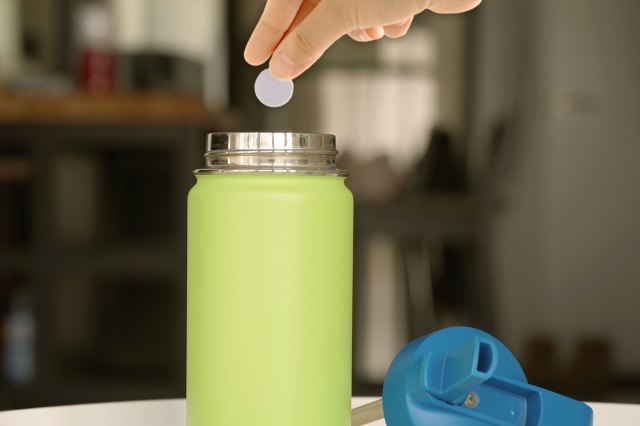
Some travel mugs and water bottles are far too narrow to reach into and clean with a sponge or even a brush. If this is the case, fill the mug or bottle with water and let a denture tablet dissolve overnight. The next morning, wash out the remnants with warm, soapy water, and you won’t have to worry about hard water buildup or unpleasant odors any longer.

Advertisement

To Clean Food Container Discoloration

Spaghetti, curry dishes, and other saucy foods can leave unsightly stains on food storage containers. To remove the discoloration, fill the container with warm water and add a denture tablet. After a few hours have passed, simply wipe away those stains with warm water and soap.

To Unclog Showerheads and Faucets

Hard water buildup can clog showerheads and faucets, restricting water flow and pressure. Thankfully, there’s a solution: Take a plastic sandwich bag (or freezer bag, depending on the size of your fixture) and fill it with warm water and a denture tablet. Then secure the bag around the spout using a rubber band. The effervescence will help break down the mineral deposits in just a few hours, after which you can remove the bag and brush away the remnants.

Advertisement
Bennett Kleinman
Staff Writer
Bennett Kleinman is a New York City-based staff writer for Optimism Media, covering topics for several brands including House Outlook and Better Report. He previously contributed to television programs such as "Late Show With David Letterman" and "Impractical Jokers," and digital publications like The Onion. Bennett is also a devoted New York Yankees and New Jersey Devils fan, and thinks plain seltzer is the best drink ever invented.
This article is for general informational purposes only.
Affiliate Disclaimer 
|
Financial Disclaimer
Featured Image Credit:  Credit: Yanwei Jiang/ iStock | Updated  Sep 25, 2024 |