Advertisement
Decorating 3m read
0

This Paint Finish Promotes Better Sleep

Your bedroom should be an oasis, a place where you (ideally) sleep soundly and wake up refreshed, ready for a new day. Let’s be real, though — that’s not always the case, especially if work stress or a snoring partner keeps you awake past bedtime. Piles of unfolded laundry and late-night phone scrolling don’t help you clock in quality z’s either.

All featured products and deals are selected independently and objectively by the author. House Outlook may receive a share of sales via affiliate links in content.

Your bedroom should be an oasis, a place where you (ideally) sleep soundly and wake up refreshed, ready for a new day. Let’s be real, though — that’s not always the case, especially if work stress or a snoring partner keeps you awake past bedtime. Piles of unfolded laundry and late-night phone scrolling don’t help…

There are a few essential ingredients for a good night’s sleep: a bed that’s your preferred firmness, a cool temperature, light-blocking window coverings, and a pillow that accommodates your sleeping position. Add the proper paint finish to that list too. That’s right — the paint finish you choose for your bedroom could be the difference between tossing and turning and snoozing soundly.

A matte paint finish is often recommended for bedrooms because it absorbs light, rather than reflecting it, creating a softer, cozier atmosphere. Since a matte finish gives off little to no shine, you’re left with a smooth, velvety look that aids in drifting off to dreamland.

Related: 8 Clever Design Tips for a Cozy Space Without Clutter

Steer clear of glossy or semi-gloss options in the bedroom. Those finishes reflect light, which can make a space feel energizing rather than restful. Glossy and semi-gloss paints are best utilized in kitchens and bathrooms, as they resist stains and moisture. This allows for easy clean-up of spaghetti sauce splatter in a kitchen and helps prevent mold growth in a bathroom.

Advertisement

The Best Bedroom Paint Colors for Improved Sleep

For an even more restful bedroom, consider one of these sleep-promoting matte paint colors:

• Sage green evokes a similar feeling to being in nature, which promotes a peaceful setting.

• Warm white is always a good paint choice. It’s the ultimate neutral that acts as a blank slate, though you’ll want to be mindful of the undertone. A bright white is stimulating, while a white with yellow, red, or beige undertones is warming.

• Soft blues, such as powder blue or pastel blue, create a calm environment since the shades are often associated with clear skies or water.

• Blush pink — a barely-there rosy tone, not a bright Barbie pink — is a comforting color that adds a gentle warmth without feeling overwhelming.

Advertisement
Megan McCarty
Writer
Megan McCarty is a Los Angeles-based writer who covers the fun stuff: design, travel, wellness, beauty, and fashion. She has written for publications including Domino, The Spruce, MyDomaine, Bustle, and Rue Magazine. Her life rules include, but are not limited to, zipper when merging, contribute to your IRA, and do the nice thing.
This article is for general informational purposes only.
Affiliate Disclaimer 
|
Financial Disclaimer
Featured Image Credit:  Alexander Mass/ Pexels | Updated  Feb 24, 2025 |
Advertisement
Cleaning 3m read
0

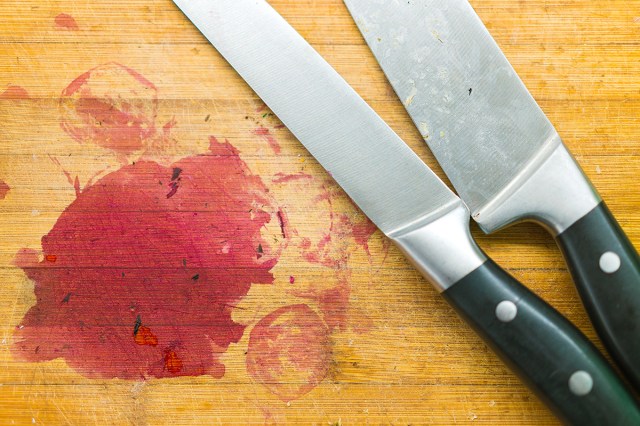
How a Chef Removes Stubborn Stains From Wooden Cutting Boards

Commercial kitchens are filled with durable polyethylene cutting boards, which are relatively inexpensive, long-lasting, and capable of withstanding the high heat of a commercial dishwasher. Yet at home, many chefs opt for wooden cutting boards. They’re functional, beautiful, and may even have antimicrobial properties, unlike their plastic counterparts. The downside is they’re prone to staining, which can make them less attractive. There are several hacks out there for removing cutting board stains, but what do the pros do? Let’s explore some chef-approved, stain-fighting techniques.

All featured products and deals are selected independently and objectively by the author. House Outlook may receive a share of sales via affiliate links in content.

Commercial kitchens are filled with durable polyethylene cutting boards, which are relatively inexpensive, long-lasting, and capable of withstanding the high heat of a commercial dishwasher. Yet at home, many chefs opt for wooden cutting boards. They’re functional, beautiful, and may even have antimicrobial properties, unlike their plastic counterparts. The downside is they’re prone to staining,…

Removing Stains From Wood Cutting Boards

The good news is that many popular stain-removal hacks actually work. Scouring with baking soda or kosher salt works because both are gentle abrasives that also absorb pigments. Acidic liquids such as vinegar and lemon juice have a bleaching effect and act as solvents. Overproof alcohol is a lesser-known but surprisingly effective solvent for lifting stains.

Adding an acid to baking soda increases its stain-removing power by causing it to fizz. Hydrogen peroxide works similarly, bleaching and sanitizing the board. A diluted solution of chlorine bleach (1 tablespoon per gallon of water) offers the same benefits.

Related: An Easy Way To Remove Baked-On Food in Your Oven

So, is there a winning combination or specific order for these cleaning methods? Here’s what our resident chef suggests.

Advertisement

The Ultimate Stain-Removal Method

Unless the manufacturer of your cutting board suggests a different process, the following steps will effectively remove most common cutting board stains: 

1. Pour high-proof alcohol, such as Everclear or Golden Grain, over the stain and let it rest for five minutes before wiping it off.

2. Shake a small mound of baking soda or coarse salt over the stain, and use a damp cloth or half of a lemon to scour it well.

3. Wash the cutting board with dish soap and warm water, rinse, towel dry, then apply either 3% hydrogen peroxide or a solution of 1 teaspoon of chlorine bleach in a quart of water. Let it sit for five minutes, then air-dry or wipe dry with a clean towel.

Bonus Tip

Over time, the working surface of your wood cutting board becomes porous and easily stained, and scraping it periodically with a putty knife helps to remove that layer. For truly well-used boards, taking them to a wood shop and running them through a planer restores their pristine original finish.

Once your board is clean and completely dry, seal it with a food-grade mineral oil or specialized cutting board oil (available online or at most kitchenware retailers). This seals the wood, preserving its beauty and protecting against future stains.

Advertisement
Fred Decker
Writer
Fred Decker is a trained chef and former restaurateur. Since closing his restaurants over a decade ago he has been a prolific freelance writer, publishing several thousand articles on dozens of high-volume websites including Taste Of Home, Hunker, Tasting Table, Week&, eHow, and GOBankingRates. He lives on a rural acreage shared with a big garden, chickens, rabbits, and grandkids.
This article is for general informational purposes only.
Affiliate Disclaimer 
|
Financial Disclaimer
Featured Image Credit:  Pike-28/ Shutterstock | Updated  Feb 14, 2025 |
Advertisement
Food & Drink 3m read
0

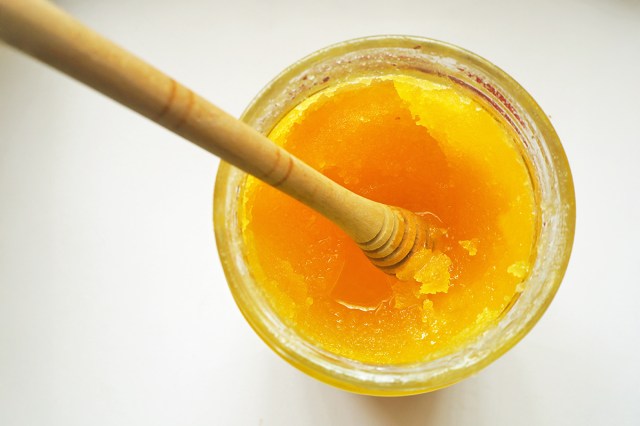
Don’t Throw Away Crystalized Honey — Do This Instead

Honey is the original all-natural sweetener. It’s more than just an ingredient — it’s a cultural benchmark, which is why we speak of things as “sweeter than honey” or “a land of milk and honey.” It’s also an unusually durable food, turning up in ancient tombs still unspoiled. Yet, a jar of honey stored in your cupboard for just a few months may set into a solid, crystallized lump and lose its free-flowing beauty. You don’t need to throw it out, though. Crystallized honey hasn’t spoiled, and you can salvage it quickly and easily.

All featured products and deals are selected independently and objectively by the author. House Outlook may receive a share of sales via affiliate links in content.

Honey is the original all-natural sweetener. It’s more than just an ingredient — it’s a cultural benchmark, which is why we speak of things as “sweeter than honey” or “a land of milk and honey.” It’s also an unusually durable food, turning up in ancient tombs still unspoiled. Yet, a jar of honey stored in…

A Quick Q&A About Crystallized Honey

First, there are a few common questions about crystallized honey that we should address.

Why Is My Honey Crystallized?

Did you ever make rock candy as a kid? It starts with creating a sugar-heavy solution. Then, you add strings or wooden skewers to syrup-filled Mason jars to attract the sugar and form crystals. Honey is a heavy solution of natural sugars, and contains grains of pollen that attract the sugars. So, crystallization occurs naturally over time.

Is Crystallized Honey Still Good?

Absolutely. Think of it as you do peanut butter: It can be smooth or crunchy, but it’s good either way. In this case, it has simply gone from pourable to spreadable.

Related: An Easy Trick To Revive Carrots That Have Gone Limp

What Can I Do With Crystallized Honey?

You can use it in many of the same ways. Bake with it, spread it on a biscuit, or stir it into a hot drink.

Advertisement

How To “Uncrystallize” Honey

If you prefer to use honey in its liquid form, it’s easy to fix. Just put your plastic squeeze bottle in a bowl or saucepan of warm (not boiling) water, and wait for five to 10 minutes (depending on how much honey has crystallized). You may have to give the honey a good stir to melt all of the crystals, but the heat should return it to its liquid gold state.

If the honey is in a glass jar, you can simply microwave it in 30-second increments until it’s entirely liquified again. For artisan honeys with delicate flavors, keep the temperature low — ideally under 100 degrees Fahrenheit — to protect those volatile aromas. For mass-market supermarket honey, you can risk a little impatience and higher temperatures. 

Honey will be slow to recrystallize at temperatures between 70 and 80 degrees Fahrenheit, so keeping it in a warm spot is helpful. Alternatively, you can delay crystallization for much longer by storing honey in the fridge, although this will make it stiff and less pourable. Just let it warm up to room temperature before you use it, and it’ll be fine.

Advertisement
Fred Decker
Writer
Fred Decker is a trained chef and former restaurateur. Since closing his restaurants over a decade ago he has been a prolific freelance writer, publishing several thousand articles on dozens of high-volume websites including Taste Of Home, Hunker, Tasting Table, Week&, eHow, and GOBankingRates. He lives on a rural acreage shared with a big garden, chickens, rabbits, and grandkids.
This article is for general informational purposes only.
Affiliate Disclaimer 
|
Financial Disclaimer
Featured Image Credit:  Hsyn20/ Shutterstock | Updated  Feb 14, 2025 |
Advertisement
Gardening 3m read
0

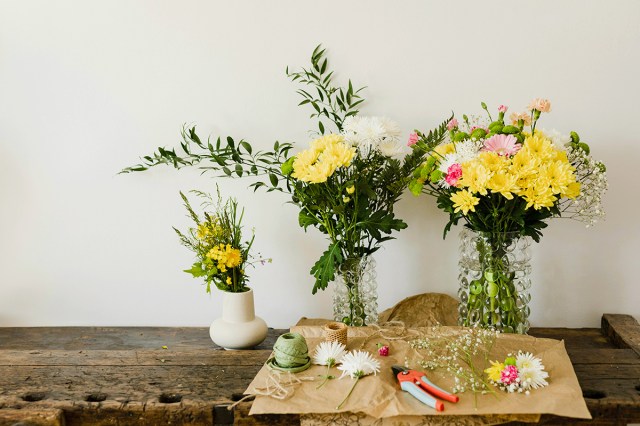
This Ingredient Is the Secret to Longer-Lasting Flowers

Nothing adds vibrancy, fragrance, and a dose of the outdoors to a home quite like fresh-cut flowers. A vase full of dahlias, tulips, or any of your favorite blooms is the ultimate centerpiece for a coffee table or dining table. There’s one downside, though — flowers never last quite as long as you’d like, especially considering how expensive a single bouquet can be. Often, petals seem to start falling the second you stick those stems in a vase.

All featured products and deals are selected independently and objectively by the author. House Outlook may receive a share of sales via affiliate links in content.

Nothing adds vibrancy, fragrance, and a dose of the outdoors to a home quite like fresh-cut flowers. A vase full of dahlias, tulips, or any of your favorite blooms is the ultimate centerpiece for a coffee table or dining table. There’s one downside, though — flowers never last quite as long as you’d like, especially…

But there’s good news: Adding one simple ingredient to your flowers’ water can help them stay fresher for longer. Whether you receive a bouquet on your doorstep or cut stems from your garden, open up your fridge or head to the beverage aisle of your local grocery store before arranging the flowers in a vase.

What’s the secret? A splash of a sugary soda such as Starry, 7UP, or Sprite. Soda’s high sugar content serves as food for the flowers, which helps sustain them. Lemon-lime soda also contains citric acid, which can lower the pH of the water. Flowers thrive in a slightly acidic environment, as it helps water flow up the stems easier. This keeps the blooms hydrated and reduces harmful microbes in the water.

Advertisement

Put down your bottle of Coke, though. Clear sodas are a better option than colored ones because they won’t discolor the water, which is especially important if your vase is transparent. Neon-yellow or brown flower water — no, thank you. Don’t reach for the diet versions of Starry, 7UP, and Sprite either, since they lack the full sugar content.

Related: 3 Hacks To Keep Store-Bought Roses Fresh and Beautiful

To use this method, use a 50-50 soda-to-water ratio. Cut the stems at a 45-degree angle before placing them in the vase to help with water uptake.

Bonus Tip

If you don’t keep soda in your fridge, rummage through your bar cart instead. A splash of vodka is another secret to longer-lasting flowers. Vodka slows bacterial growth, keeping the water cleaner and extending the flowers’ lifespan. Save the heavy pours for your martinis, though; too much alcohol can dehydrate the flowers. Instead, add just a few drops of vodka along with a teaspoon of white granulated sugar to the water.

Advertisement
Megan McCarty
Writer
Megan McCarty is a Los Angeles-based writer who covers the fun stuff: design, travel, wellness, beauty, and fashion. She has written for publications including Domino, The Spruce, MyDomaine, Bustle, and Rue Magazine. Her life rules include, but are not limited to, zipper when merging, contribute to your IRA, and do the nice thing.
This article is for general informational purposes only.
Affiliate Disclaimer 
|
Financial Disclaimer
Featured Image Credit:  Kaboompics/ Pexels | Updated  Feb 13, 2025 |
Advertisement
Food & Drink 2m read
0

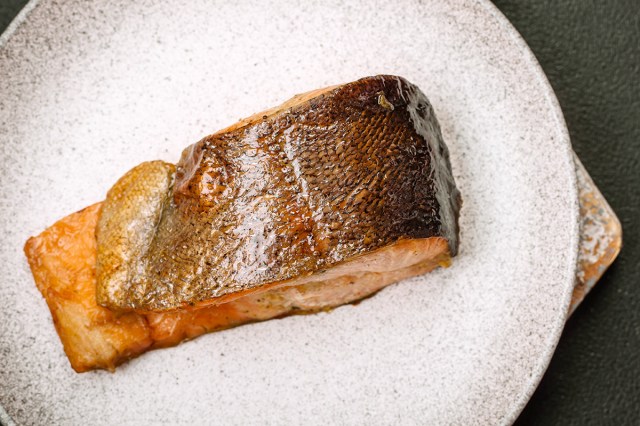
A Foolproof Method for Perfectly Crispy Fish Skin

How do you buy your fish? For many of us, the default option is boneless, skinless fillets. They’re versatile, convenient, and fuss-free, which counts for a lot when you’re pulling together a quick weeknight dinner. But there are compelling reasons to choose fish with skin, as well. Not only is the skin full of protein, nutrients, and heart-healthy omega-3 fatty acids, but it also provides a ton of flavor. It’s at its best when perfectly crisp, but getting it just right without it overcooking or sticking to the pan can be difficult. Here’s a simple hack, using a kitchen staple you probably already have, that delivers great results every time.

All featured products and deals are selected independently and objectively by the author. House Outlook may receive a share of sales via affiliate links in content.

How do you buy your fish? For many of us, the default option is boneless, skinless fillets. They’re versatile, convenient, and fuss-free, which counts for a lot when you’re pulling together a quick weeknight dinner. But there are compelling reasons to choose fish with skin, as well. Not only is the skin full of protein,…

The Parchment Paper Hack

Here’s the thing: If your pan isn’t hot enough, the proteins and collagen in the fish skin will bond to microscopic pores and fissures in the pan’s surface as it cooks. That makes the skin stick and tear, ruining its appearance. The kitchen team at ChefSteps, one of the companies that helped popularize sous vide cooking (among other things), came up with a brilliant hack using parchment paper to prevent fish skin from sticking. Here’s how it works.

Related: A Simple Trick for Getting the Garlic Smell Off Your Hands
Advertisement

1. While your skillet heats, cut a piece of parchment paper slightly larger than your fish.

2. Place the piece of parchment paper in the pan and lightly drizzle it with vegetable oil.

3. Put the fish skin-side down on the parchment, and cook until it’s well seared and crisp underneath. (This is a good time to season the skinless side.)

4. Flip the fish once the skin side is crisp, and cook until done. (The USDA recommends an internal temperature of 145 degrees Fahrenheit.)

With this method, you’ll get perfectly crispy salmon skin (or bass, or perch, or trout, or … well, you get the idea) every time. You can cook more than one piece of fish at a time using the parchment paper hack; just be careful not to overcrowd the pan. Two or three pieces are all you’ll want in a 9- or 10-inch skillet, so move up to a 12-inch skillet for four portions.

Advertisement
Fred Decker
Writer
Fred Decker is a trained chef and former restaurateur. Since closing his restaurants over a decade ago he has been a prolific freelance writer, publishing several thousand articles on dozens of high-volume websites including Taste Of Home, Hunker, Tasting Table, Week&, eHow, and GOBankingRates. He lives on a rural acreage shared with a big garden, chickens, rabbits, and grandkids.
This article is for general informational purposes only.
Affiliate Disclaimer 
|
Financial Disclaimer
Featured Image Credit:  Tetiana Chernykova/ Shutterstock | Updated  Feb 11, 2025 |
Advertisement
Cleaning 3m read
0

How To Never Lose a Sock in the Dryer Ever Again

It never fails. You gather all the dirty clothes and put them in the washing machine. When the cycle is complete, you transfer the clothes to the dryer. As you sort and fold the laundry, you discover that at least one sock is without its mate. Every. Single. Time.

All featured products and deals are selected independently and objectively by the author. House Outlook may receive a share of sales via affiliate links in content.

It never fails. You gather all the dirty clothes and put them in the washing machine. When the cycle is complete, you transfer the clothes to the dryer. As you sort and fold the laundry, you discover that at least one sock is without its mate. Every. Single. Time.

The lost sock phenomenon affects approximately 10 out of 10 households. This isn’t official data, but anecdotal evidence gleaned from our laundry rooms suggests a near-100% accuracy rate. Granted, socks are small and easy to misplace — especially baby and toddler socks — so it makes sense that they might go missing from time to time. To avoid the frustration of constantly replacing socks, try this simple hack that will save you time and money.

A Trick To Keep Socks Together

Sure, you can tie rubber bands around pairs of socks or clip them together, but those methods aren’t foolproof. The best way to prevent socks from disappearing into the abyss of the washer or dryer is to launder them in mesh garment bags.

Related: Why You Should Have Two Different Laundry Hampers
Advertisement

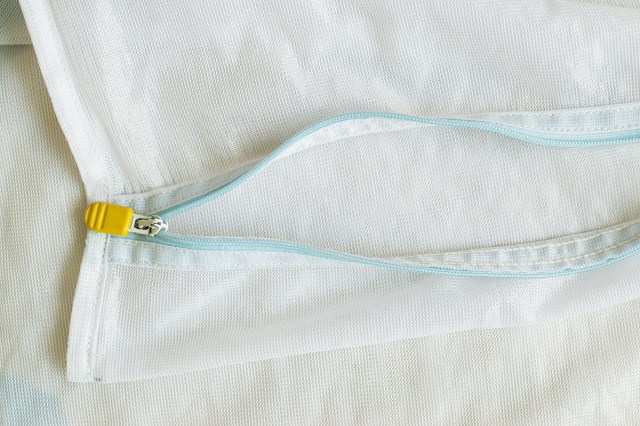
Mesh laundry bags come in a variety of sizes. The smallest size works best for one to three pairs of socks, while medium and large bags are great for washing a bunch of pairs together. Since they are made of mesh, water and detergent can flow through freely for a thorough cleaning. A well-designed zippered closure, often with a tuck-away tab, ensures the bag stays closed during the cycle and prevents clothes from getting tangled or snagged.

While most mesh laundry bags are safe to use in the dryer, it’s important to check for plastic or rubber components that could melt in high heat. You can find high-quality mesh laundry bags with tons of five-star reviews for under $10 (a few of our favorites are linked above).

Bonus Tip

Mesh laundry bags can be used for much more than just socks. They’re great for organizing and protecting delicates, undergarments, hosiery, swimsuits, sneakers, pet collars and leashes, hair accessories, microfiber cloths, stuffed animals, and more.

If you can’t convince your family members to place both socks in the hamper together (instead of scattering them all over the house), well, you’re going to need another hack for that.

Advertisement
Jill Layton
Writer
Jill Layton started writing professionally when she realized her emails and texts were kinda funny. She’s an affiliate shopping writer and lifestyle contributor for Scary Mommy, Bustle, Mic, and Best Products. She’s the mom of two alarmingly witty kids and the world’s most perfect dog.
This article is for general informational purposes only.
Affiliate Disclaimer 
|
Financial Disclaimer
Featured Image Credit:  Pataporn Kuanui/ Shutterstock | Updated  Feb 19, 2025 |
Advertisement
Food & Drink 3m read
0

This Hack Prevents Natural Peanut Butter From Separating

There’s a lot to like about natural peanut butter, including that it’s minimally processed and typically contains just peanuts and salt (and sometimes, even the salt is left out). However, it has one major downside: oil separation. You know what we mean — that layer of oil sitting on top of the peanut butter when you open the jar. Well, it turns out there’s a relatively simple and low-effort way to avoid the problem. Here’s what you need to know.

All featured products and deals are selected independently and objectively by the author. House Outlook may receive a share of sales via affiliate links in content.

There’s a lot to like about natural peanut butter, including that it’s minimally processed and typically contains just peanuts and salt (and sometimes, even the salt is left out). However, it has one major downside: oil separation. You know what we mean — that layer of oil sitting on top of the peanut butter when you…

No More Oily Mess

There’s a perfectly logical, scientific reason why natural peanut butter separates: The oil in the ground peanuts is lighter than the solids, so over time it rises to the top. The deeper you dig into the jar, the less oil is left in the peanuts, making the peanut butter dry and unappetizing. This is exactly why mass-market brands use so many stabilizers and emulsifiers — to prevent oil separation and keep the peanut butter spreadable.

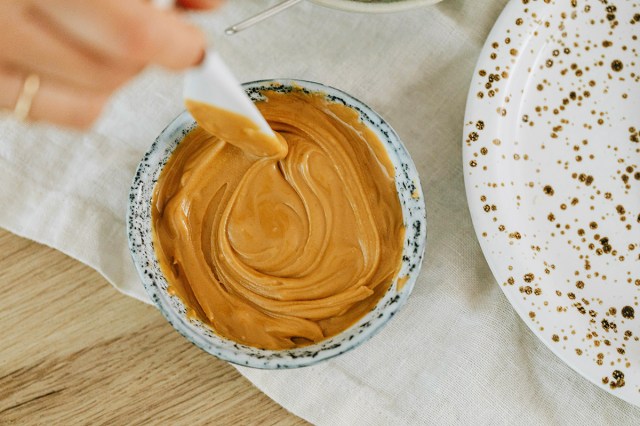
If you’re tired of sticking a knife or spoon into the jar to stir it until it cooperates, take note: You can actually use the oil’s tendency to rise to your advantage. Make a point of buying your next jar of natural peanut butter or other nut butter at least a week before you’ll need to use it, and store the jar upside down. The oil will travel from the top of the jar (which is now the bottom) to the bottom of the jar (which is now the top). Some oil will be left behind to moisten and lubricate the peanut solids. 

Related: 10 Chef-Approved Storage Hacks To Make Food Last Longer

When you right the jar and open it, the process will repeat itself in the opposite direction. The peanut butter will basically mix itself, requiring no effort on your part. 

Advertisement

Tips To Keep Peanut Butter Spreadable

Depending on the extent of the peanut butter’s separation, you may need to repeat this process a few times before it’ll mix properly. Alternatively, you could scoop it out of the jar and use a food processor or stand mixer to thoroughly reincorporate the oil.

After the peanut butter is mixed and returned to the jar, flipping it upside down periodically will help prevent the oil from separating again. Keeping your jar in the fridge, which thickens the oil and slows the separation process, also helps. And if you don’t eat peanut butter regularly, this will keep it from going rancid before you finish the jar.

Advertisement
Fred Decker
Writer
Fred Decker is a trained chef and former restaurateur. Since closing his restaurants over a decade ago he has been a prolific freelance writer, publishing several thousand articles on dozens of high-volume websites including Taste Of Home, Hunker, Tasting Table, Week&, eHow, and GOBankingRates. He lives on a rural acreage shared with a big garden, chickens, rabbits, and grandkids.
This article is for general informational purposes only.
Affiliate Disclaimer 
|
Financial Disclaimer
Featured Image Credit:  Kaboompics/ Pexels | Updated  Feb 7, 2025 |
Advertisement
Gardening 2m read
0

How To Turn Dead Roses Into Fragrant Potpourri

Don’t toss your dead Valentine’s Day roses — turn them into homemade potpourri instead. DIY potpourri is actually much easier than it seems (it’s similar to making dried orange slices for the holidays), and you can make it with both fresh and dried roses.

All featured products and deals are selected independently and objectively by the author. House Outlook may receive a share of sales via affiliate links in content.

Don’t toss your dead Valentine’s Day roses — turn them into homemade potpourri instead. DIY potpourri is actually much easier than it seems (it’s similar to making dried orange slices for the holidays), and you can make it with both fresh and dried roses.

How To Make DIY Potpourri

To create your homemade potpourri, start by separating all the rose petals from the flowers and adding them to a parchment-lined baking sheet. Preheat the oven to 200 degrees Fahrenheit and place the sheet in the oven for a few hours. The time it takes to “bake” these petals depends largely on how fresh the flowers are. We recommend starting with one hour and then checking on them every 30 to 45 minutes thereafter.

Baking the petals on low heat removes all of the moisture, preventing mold growth and creating that dried effect without having to air-dry the roses. You’ll know the petals are done when they’ve deepened in color, the edges have curled, and they feel crisp and brittle.

Advertisement

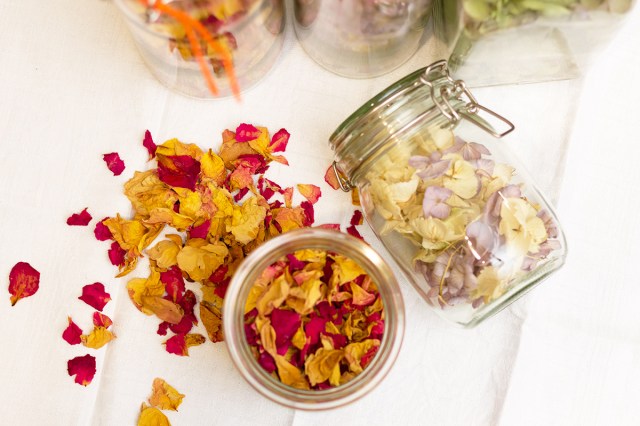
Once the rose petals are dried, let them cool completely. Then, add a fragrant essential oil (or essential oil blend if you want a more customized scent) to cotton rounds and place them in a Ziploc bag with the petals for one week. This will allow the oils to permeate the petals, giving them that potent potpourri fragrance. After a week has passed, fill jars, sachets, or bowls with the petals and add them to your bathroom, entryway, drawers, or anywhere else that could use a nice aromatic pick-me-up.

Related: 3 Hacks To Keep Store-Bought Roses Fresh and Beautiful

For a store-bought look, add other dried items such as citrus slices (or peels), eucalyptus sprigs, whole cloves, and herbs. You can also place the mixture in a wooden potpourri bowl and wrap it in cellophane for a chic DIY gift idea.

Advertisement
Jessie Quinn
Writer
Jessie Quinn is a Los Angeles-based lifestyle journalist with words published in PEOPLE, StyleCaster, Apartment Therapy, The Spruce, Byrdie, and more. She has a Bachelor's Degree in fashion journalism from Academy of Art University and her work spans across many categories, including style, beauty, home, health, crafts, and more.
This article is for general informational purposes only.
Affiliate Disclaimer 
|
Financial Disclaimer
Featured Image Credit:  Lucas Tscherteu/ Shutterstock | Updated  Feb 6, 2025 |
Advertisement
Decorating 2m read
0

Stop Your Home Decor From Slipping and Sliding

Decorating a space with your favorite pieces makes it truly yours, whether you’re displaying a luxury candle, a brass sculpture, or a thrifted vase. But if you have kids, pets, or are prone to clumsiness, home decor can easily be knocked over. The best-case scenario is that you pick it up and put it back in place. The worst-case scenario? It falls, breaks, and you not only have a mess to clean but also lose a beloved piece of decor. Luckily, there’s a home essential that can prevent this disaster from happening, and it costs less than $15.

All featured products and deals are selected independently and objectively by the author. House Outlook may receive a share of sales via affiliate links in content.

Decorating a space with your favorite pieces makes it truly yours, whether you’re displaying a luxury candle, a brass sculpture, or a thrifted vase. But if you have kids, pets, or are prone to clumsiness, home decor can easily be knocked over. The best-case scenario is that you pick it up and put it back…

Treat Your Home Decor Like Works of Art

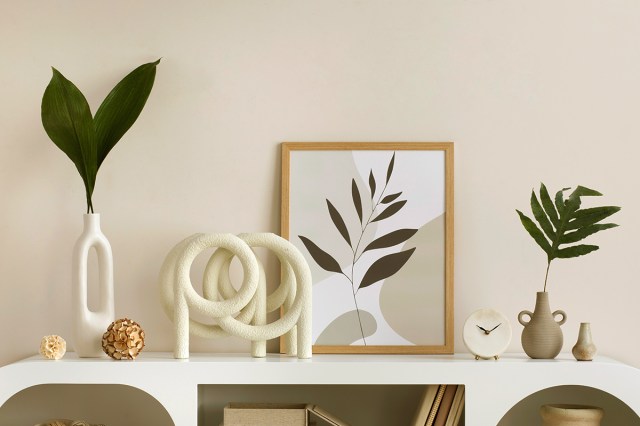
Museum gel is a clear gel adhesive that holds items firmly in place. It’s typically used in museums to prevent fragile items from tipping over, but it can also be used in your home. This clear, nontoxic, reusable adhesive works well on most smooth, nonporous surfaces. Best of all, it doesn’t cause discoloration or leave behind a sticky residue, making it the ultimate home hack to prevent small or breakable items from moving.

Related: 5 Tips for Finding Home Decor Treasures at Thrift Stores

According to TikToker @sweetandtidy_, it’s especially useful for securing lightweight items such as candles or glassware since they’re fragile and can easily slide around.

Advertisement

How To Use Museum Gel for Home Decor

To use museum gel, scoop out a small amount and roll it into a ball. Stick it to the bottom of the item you want to stabilize. (For larger or heavier items, you can add multiple dots of museum gel for extra security.) Next, place the item in its designated spot and press down firmly for five to 10 seconds. Finally, wait at least 30 minutes for the gel to bond before testing it.

(Not So) Sticky Situations

Beyond its use for home decor, museum gel is also fantastic for keeping your drawers in check — more specifically, the organizers that nest inside drawers. Whether it’s in your kitchen or home office desk, you can add museum gel to the bottom of drawer organizers to keep them from shifting when opening and closing the drawers.

Advertisement
Pauline Lacsamana
Writer
Pauline Lacsamana is a freelance writer and editor who specializes in commerce, home, design, and lifestyle. She has bylines in The Spruce, Business Insider, U.S. News & World Report, Hunker, MyDomaine, Parade, and more.
This article is for general informational purposes only.
Affiliate Disclaimer 
|
Financial Disclaimer
Featured Image Credit:  Followtheflow/ Shutterstock | Updated  Feb 6, 2025 |
Advertisement
Food & Drink 2m read
0

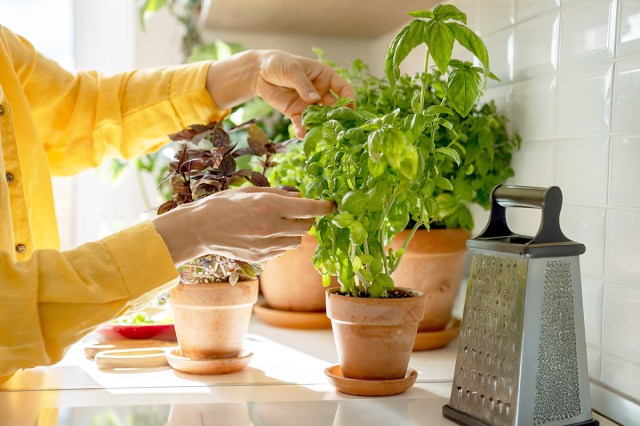
De-Stem Herbs Effortlessly With This Kitchen Staple

Fresh herbs are wonderful to cook with (and sometimes to bake with), but they have a couple of shortcomings. One is that they’re sold in large bunches, so you have to find ways of keeping them fresh and storing the leftovers. A more immediate issue is that stripping the flavorful leaves from the tough stems is a pain. Sure, you can buy purpose-made herb strippers, but the best kitchen gadgets are the kind you already have. That’s why an herb-stemming hack using a plain ol’ box grater has repeatedly gone viral. Here’s how it works.

All featured products and deals are selected independently and objectively by the author. House Outlook may receive a share of sales via affiliate links in content.

Fresh herbs are wonderful to cook with (and sometimes to bake with), but they have a couple of shortcomings. One is that they’re sold in large bunches, so you have to find ways of keeping them fresh and storing the leftovers. A more immediate issue is that stripping the flavorful leaves from the tough stems…

The Box Grater Hack for Fresh Herbs

Commercial herb strippers are simple metal or plastic plates with different-sized holes in them. You insert the herb’s stem into a suitable-sized hole, pull it through, and the leaves remain. Conveniently, your box grater’s sides are also filled with holes, each with a sharp cutting edge to strip away the leaves.

So, how does it work? It’s pretty simple.

1. Choose the side of your grater with holes that match the size of the herb you’re stripping (large or medium for rosemary, small for thyme, etc.).

2. Insert the stem end of the herb through a hole, starting from the outside.

3.  Using your fingers, locate the stem inside the box grater and gently pull it through the hole.

Advertisement

If you’ve chosen the right-sized hole, the leaves will drop onto your work surface and you’ll be left with a mostly bare stem. This hack works best when the herb has a reasonably sturdy stem (oregano, parsley, basil) or a woody one (rosemary, thyme, sage). For herbs with large leaves or tender, easily broken stems (cilantro, dill, mint), you may find it easier to strip them by hand.

Related: This Chef-Approved Trick Keeps Herbs Fresher for Longer

Of course, you’ll still need to chop or mince the herbs in many cases, which brings us to another gadget you probably already have. A pizza cutter wheel makes short work of chopping leafy herbs; most are dishwasher-safe and easy on your wrist.

Advertisement
Fred Decker
Writer
Fred Decker is a trained chef and former restaurateur. Since closing his restaurants over a decade ago he has been a prolific freelance writer, publishing several thousand articles on dozens of high-volume websites including Taste Of Home, Hunker, Tasting Table, Week&, eHow, and GOBankingRates. He lives on a rural acreage shared with a big garden, chickens, rabbits, and grandkids.
This article is for general informational purposes only.
Affiliate Disclaimer 
|
Financial Disclaimer
Featured Image Credit:  DimaBerlin/ Shutterstock | Updated  Feb 13, 2025 |